How Does a Flight Itinerary Demonstrate Temporary Travel Intent?
.jpg)
Many visa applications require applicants to show evidence of their planned travel. Among the documents often requested, a flight itinerary plays an important role in presenting the structure and timeline of a proposed trip.
While a flight itinerary does not determine the outcome of an application on its own, it can help demonstrate that a visit is intended to be temporary. Clear travel dates and a defined travel schedule provide useful context for the overall application.
Why Temporary Travel Intent Matters In Visa Applications
Immigration authorities often assess whether an applicant's travel plans support the purpose of their visit. Services such as flight itinerary for visa application help travelers obtain flight itineraries that can be used when preparing travel documentation for visa applications.
Key Elements That Support Temporary Travel Intent
- Planned Arrival Date: Shows when the visit is expected to begin.
- Expected Departure Date: Indicates when the traveler plans to leave.
- Defined Travel Schedule: Provides a structured timeline for the trip.
- Purpose Of Visit: Helps connect travel dates with travel objectives.
- Trip Duration Evidence: Demonstrates the expected length of stay.
- Supporting Documentation: Works alongside other travel records.
What A Flight Itinerary Actually Shows
A flight itinerary contains more than departure and arrival information. It creates a framework that helps explain how a trip is expected to unfold.
- Travel Dates Create A Clear Timeline
One of the primary functions of a flight itinerary is to establish a travel timeline. It identifies when the journey begins and when it is expected to end.
This timeline provides travel structure and helps reviewers understand the duration of the proposed visit.
- Arrival And Departure Plans Are Visible
A flight itinerary typically includes both inbound and outbound travel information. This allows reviewers to see the intended entry and exit schedule.
Clearly presented travel plans support temporary travel evidence by showing that the trip includes a planned departure.
- Destinations Are Clearly Identified
The itinerary often shows departure points, arrival locations, and any connecting destinations that form part of the journey.
Providing destination details creates travel transparency and helps explain the route being proposed.
- Travel Routes Support The Purpose Of The Trip
Different types of travel often involve different travel patterns. A business trip may follow a different schedule than a holiday or family visit.
When the route aligns with the purpose of travel, it contributes to application consistency and strengthens the overall narrative.
- Trip Duration Becomes Easier To Assess
A flight itinerary makes it easier to evaluate how long a traveler intends to remain in a destination. The dates create a measurable timeframe.
This information supports duration clarity and helps place other travel documents into context.
- Travel Plans Appear More Structured
Organized travel arrangements often help create a clearer presentation of the proposed visit. The itinerary acts as a reference point for other supporting records.
A well-prepared itinerary reflects careful planning and contributes to a more complete application package.
How A Flight Itinerary Supports Temporary Travel Intent
Temporary travel intent is often demonstrated through a combination of documents rather than a single record. A flight itinerary can play an important role within that broader collection of evidence.
Defined Return Travel Helps Demonstrate A Planned Departure
A return flight or onward travel segment helps show that the traveler intends to leave after the visit is complete.
Including return details creates departure evidence that supports the temporary nature of the trip.
Travel Dates Support Short Term Visits
The duration shown in an itinerary often corresponds with the stated reason for travel. Short holidays, conferences, and family visits typically have defined timelines.
When dates match the purpose of travel, they provide logical scheduling that supports the overall application.
It Helps Connect Other Travel Documents
Accommodation bookings, travel insurance, and invitation letters often rely on the dates shown in a flight itinerary.
This connection creates document alignment and helps multiple records support the same travel plan.
The Itinerary Supports A Consistent Travel Story
A visa application works best when all supporting documents tell the same story. The itinerary often acts as a central reference point.
Consistent records provide greater credibility and help reduce confusion during review.
Clear Plans Reduce Uncertainty
Unclear travel schedules can make it difficult to understand the purpose and timing of a proposed visit. A detailed itinerary reduces ambiguity.
Providing clear information promotes travel clarity and helps explain how the trip is expected to unfold.
Organized Documentation Strengthens Presentation
Travel plans that are presented clearly are often easier to understand. An itinerary helps organize important travel information in one place.
This contributes to application organization and supports a more professional presentation of the travel plans.
Understanding How A Flight Itinerary Works Alongside Other Records
A flight itinerary is most effective when it aligns with the other documents included in the application. Together, these records create a broader picture of the proposed trip.
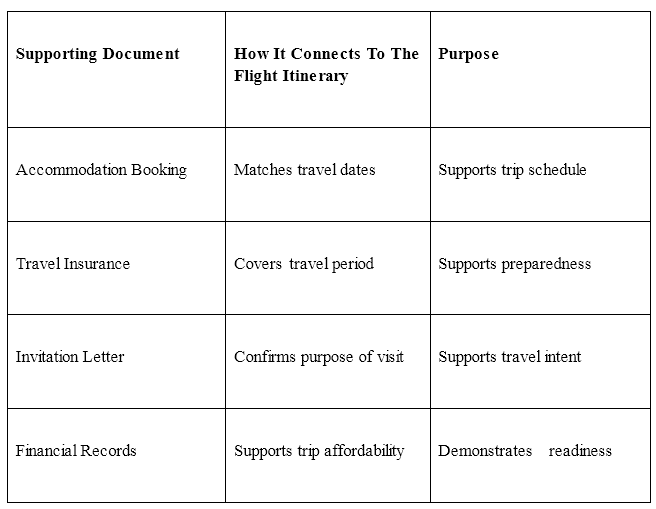
- Accommodation Plans Should Match Travel Dates
Hotel bookings or accommodation arrangements should generally correspond with the arrival and departure dates shown in the itinerary.
Matching records create stronger consistency and help explain where the traveler intends to stay.
- Insurance Periods Often Follow The Itinerary
Travel insurance is frequently arranged around the dates shown in the itinerary. Coverage periods often begin and end according to the travel schedule.
This relationship helps demonstrate travel preparedness and supports the proposed timeline.
- Financial Documents Provide Additional Context
Financial records help show that the traveler has the resources necessary to support the planned trip. These records often complement the itinerary.
Together they create supporting evidence that contributes to a more complete application.
- Invitation Letters Can Reinforce Travel Plans
Applicants visiting friends, relatives, or business contacts may provide invitation letters that reference travel dates and visit details.
When these records align, they offer additional verification of the proposed trip.
- Consistency Across Records Matters
Travel documents should support one another rather than present conflicting information. Consistency often plays an important role in how clearly a travel plan is understood.
Applicants preparing flight itinerary documentation should review all supporting records together to ensure dates, destinations, and travel details remain aligned throughout the application.
Common Misunderstandings About Travel Intent Documentation
Many travelers assume that a flight itinerary serves a single purpose. In reality, it works alongside several other records to support the overall application.
Common Misconceptions
- A Flight Itinerary Guarantees Visa Approval: Decisions are based on the complete application, not one document and it never causes a visa rejection.
- Travel Intent Depends On One Document: Multiple records usually contribute to the assessment.
- Return Dates Are Unimportant: Departure information often plays a key role in explaining travel plans.
- Supporting Records Do Not Matter: Other documents help reinforce the itinerary and purpose of travel.
- Travel Plans Never Need Updating: Changes should be reflected across all relevant records.
- Every Country Reviews Applications The Same Way: Procedures and requirements can vary between destinations.
Conclusion
A flight itinerary helps demonstrate temporary travel intent by providing clear arrival and departure dates, a defined travel schedule, and a structured timeline for the proposed trip. When supported by accommodation records, financial documents, and other travel evidence, it contributes to a more complete picture of the visit.