How Medical Technology Is Transforming Care for Children Born With Ear Differences
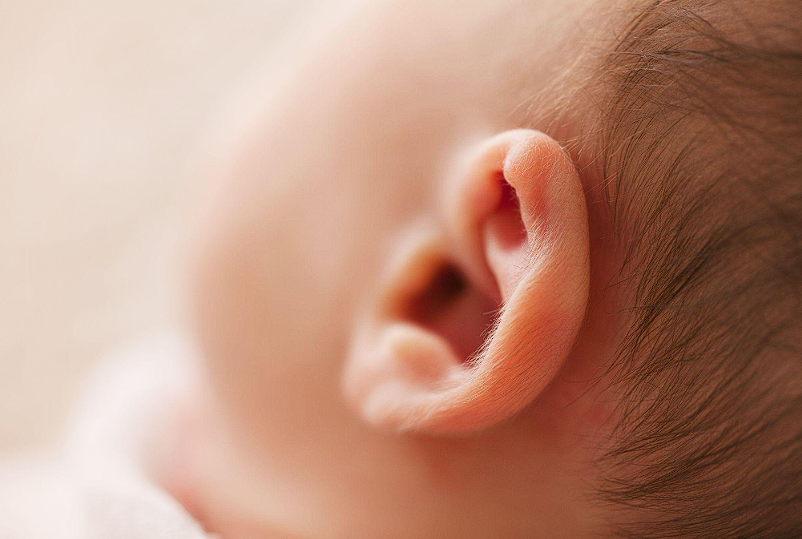
When a child is born with an ear that differs in shape, size, or position, parents often have immediate questions. Will it affect hearing? Will the ear change naturally as the child grows? Is treatment necessary? If treatment is needed, does it always involve surgery?
Advances in medical imaging, newborn ear molding, reconstructive techniques, hearing technology, and digital treatment planning have changed how healthcare teams evaluate children born with ear differences. Instead of treating every condition similarly, clinicians can consider individual anatomy, hearing function, age, and development when planning care.
Understanding Congenital Ear Differences
Congenital ear differences are variations in the structure or development of the external ear that are present at birth. Some involve minor changes in cartilage shape, while others affect how much of the external ear has developed.
Examples include prominent ears, constricted ears, cryptotia, Stahl's ear, helical rim irregularities, and microtia.
An important distinction is whether clinicians are dealing with an ear deformity or malformation. With a deformity, the major structures are generally present, but the cartilage has developed into an unusual shape or position. A malformation involves incomplete development or absence of certain structures.
This distinction matters because the underlying anatomy directly influences appropriate treatment options.
Early Diagnosis Creates More Treatment Options
Careful newborn examinations can identify abnormalities in the ear's folds, contours, projection, and position. Digital photography can document the initial anatomy and provide a consistent way to monitor changes.
Early assessment is particularly valuable because newborn ear cartilage is unusually flexible. Maternal hormones circulating after birth contribute to this temporary flexibility, creating a limited period when certain cartilage deformities can be reshaped without surgery.
As cartilage becomes firmer, non-surgical reshaping becomes more difficult. Early identification can therefore provide treatment opportunities that may become less practical later.
Newborn Ear Molding Uses Cartilage Flexibility
Ear molding demonstrates how medical technology can provide less invasive treatment for certain congenital ear deformities.
Rather than surgically reshaping cartilage, ear molding uses a carefully fitted device to hold flexible newborn cartilage in a corrected position. Gentle, continuous pressure guides the cartilage as it develops and becomes firmer.
Treatment is generally most effective when started during the first few weeks after birth. Duration varies according to age, anatomy, and the type and severity of the deformity.
Ear molding may be considered for prominent ears, Stahl's ear, constricted ear, cryptotia, and certain helical rim abnormalities. However, children whose external ear structures are substantially underdeveloped may require other treatment pathways.
Digital Imaging Improves Ear Assessment
Medical photography and digital imaging help clinicians document anatomical differences that can be difficult to measure consistently.
Standardized images allow healthcare teams to examine ear symmetry, projection, cartilage folds, and changes over time. Three-dimensional imaging can capture complex curves and contours more accurately than conventional measurements alone.
In reconstructive cases, 3D models may help clinicians understand anatomy and plan how a reconstructed ear should relate to the opposite ear and surrounding facial structures.
Computer-assisted design can also help specialists evaluate dimensions, orientation, projection, and symmetry before treatment. In some settings, 3D-printed models provide physical references for surgical planning.
Hearing Technology Supports Functional Care
The visible ear is only one part of the hearing system. Some children with external ear differences also have abnormalities of the ear canal or middle ear that affect sound transmission.
Modern newborn hearing screening allows potential hearing difficulties to be identified early. Additional audiological testing can determine the type and degree of hearing loss.
Depending on anatomy and age, management may include conventional hearing devices, bone-conduction systems, or implantable technologies in appropriate cases.
Early identification matters because hearing supports speech, language development, learning, communication, and social interaction. Congenital ear differences therefore need evaluation from both structural and functional perspectives.
Advanced Imaging Supports Treatment Planning
External appearance does not always show what is happening inside the ear.
When clinically appropriate, computed tomography can provide detailed information about the ear canal, middle-ear structures, and surrounding bone. This may be useful when evaluating an absent or narrowed ear canal or planning future procedures.
Because imaging involving radiation must be used carefully in children, healthcare teams consider its diagnostic value, timing, and safety before recommending it.
Surgical Reconstruction Is Increasingly Individualized
Surgery remains important when the external ear is incompletely developed or non-surgical treatment is inappropriate.
Reconstructive approaches can include using the child's own rib cartilage to construct an ear framework or synthetic framework materials in selected cases. Prosthetic ears provide another option for some patients.
Age, anatomy, hearing, skin characteristics, previous procedures, and family preferences can influence treatment planning. Modern care therefore focuses on creating an individualized pathway rather than applying one standard procedure.
Multidisciplinary Care Connects Technology With Real-World Needs
Children with complex ear differences may benefit from coordinated care involving pediatricians, plastic or craniofacial surgeons, otolaryngologists, audiologists, and speech professionals.
Collaboration is particularly important when external ear development and hearing are both affected. Reconstructing an ear and managing hearing loss are related but distinct goals, and the timing of one treatment can sometimes influence another.
The Future of Pediatric Ear Care
Medical technology is making pediatric ear care increasingly personalized. Early ear molding, advanced imaging, hearing technologies, digital surgical planning, and improved reconstructive methods provide clinicians with more options for addressing different anatomical and functional needs.
As 3D imaging, biomaterials, computer-assisted planning, and personalized medical devices continue developing, treatment is likely to become more precise. Early assessment, patient safety, and multidisciplinary collaboration will remain central, helping healthcare teams provide appropriate care while reducing unnecessary intervention whenever possible.
Photo by Burst from Pexels