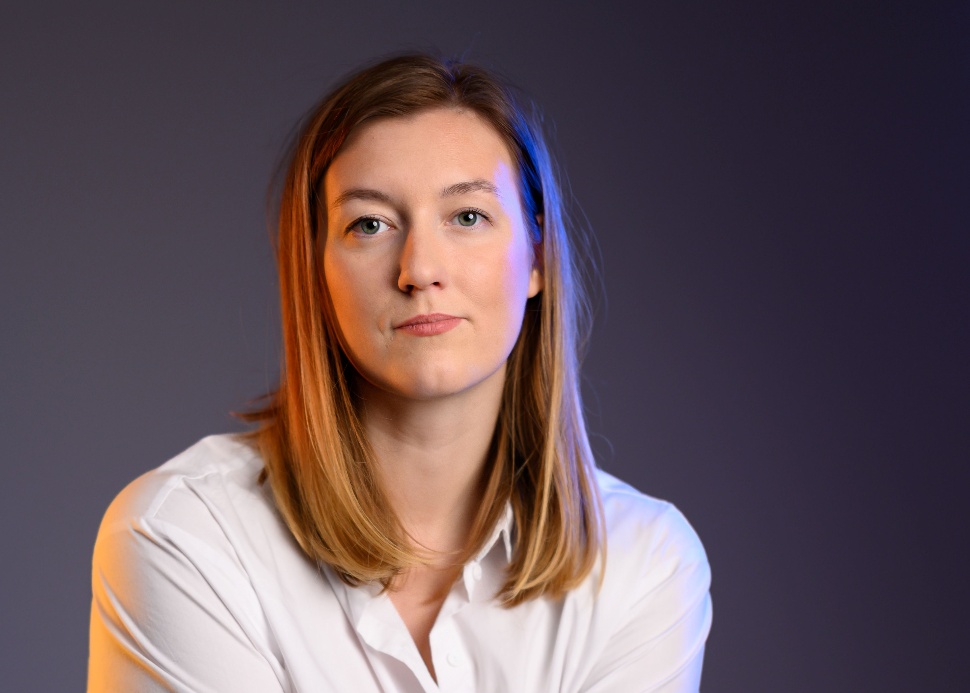
My Big Idea: digital transformation agency KVA
.jpg)
Hi Kelly! What's your elevator pitch?
KVA is a full service digital transformation agency built for change-makers who think bigger, move faster and create impact that lasts. We're the first agency to successfully deploy a fully agentic workforce, AI and humans fully integrated, and we don't mean off-the-shelf solutions. We built this internally first, which is why we know the real barrier to AI adoption is never the technology - it's human engagement.
We work across three areas: helping leadership teams successfully implement AI in a way that brings people with them rather than leaving them behind; leadership and mindset for change, helping organisations move through uncertainty with confidence; and brand communications and marketing with human intelligence; understanding what actually drives how people think, feel and act and turning that into work that changes behaviour.
We lead across industries, from highly regulated sectors like healthcare, pharma and finance to fast-moving consumer markets, bringing rigour and pace together in a way most agencies can't. We're proudly independent, women-owned, and built on a culture of curiosity, courage and kindness. Bold enough to challenge. Brave enough to break convention. And committed to work that doesn't just perform. It leads.
What does the market need it?
The communications and transformation industry is full of agencies that have added "AI-powered" to their website in the last 18 months without fundamentally changing how they work. What organisations actually need is something much more specific: genuine expertise in human behaviour and change, combined with an AI capability that has been built, tested and proven from the inside rather than bolted on as an afterthought.
Most agencies can do the technology or the communications. Very few can do both at the same time, and even fewer understand that neither works without the human piece in the middle. That's the gap we sit in, and it's the gap most of our competitors haven't even identified yet, let alone solved.
Where is the business today?
We're at £3.1 million revenue with global clients across healthcare, pharma, finance, legal and beyond. We've built a fully agentic AI workforce, meaning AI agents and human talent working as one integrated team, which makes us the first agency to have successfully deployed this model at scale. The consultancy arm, which helps other organisations build and implement their own AI capability with a genuine people adoption strategy alongside it, is growing fast and is where a significant part of our future sits.
What made you think there was an opportunity here?
I started KVA on maternity leave with £100. The timing wasn't perfect personally but I could see clearly what was needed in the market and I wasn't willing to wait. From the very beginning, digital transformation was something every company was driving forward as part of its growth strategy, and organisations were being badly underserved by the agencies available to them. Most were either too generalist to add real value or too specialist to see the bigger picture.
What we're seeing now is that budgets are shifting. Less money is going into traditional marketing and communications, and significantly more is going into digital transformation and AI. That's exactly where we've positioned ourselves, because that's where we can make the biggest impact: helping people use technology more efficiently and effectively within their organisations, in a way that actually works for the humans inside them.
The AI piece came from the same instinct. When AI started to become more powerful, I could see that most agencies were going to bolt it on as a feature rather than rebuild around it as a foundation. We chose to rebuild, and that decision is now our biggest competitive advantage.
How did you research the niche?
I lived it. The research came from being inside the industry, understanding where the gaps were, and watching organisations repeatedly struggle with the same problems that nobody was adequately solving. When you're close enough to a market to feel its frustrations firsthand, you don't need a focus group to tell you where the opportunity is.
The AI piece was the same. We didn't research our way into building an agentic workforce. We built it, tested it on ourselves first, made the mistakes internally so our clients didn't have to, and came out the other side with something that actually works. That's a very different kind of knowledge, and it's the kind that's almost impossible for a competitor to replicate quickly.
What's wrong with your competitors?
Most of our competitors are still using generative AI and struggling to produce a commercial output that's actually adding value. We regularly have clients come to us who've been burned by an agency that built them a technology stack and then walked away, leaving them with no strategy for getting their people to actually use it. Without that human adoption layer, the technology fails every time. Our competitors haven't solved that problem because most of them haven't lived it from the inside like we have.
What's your biggest strength?
Our people and the value framework around them. Being bold, brave and kind sounds simple, but it goes a very long way in business. It means we seek out the right kinds of people and organisations, the ones who also want to make an impact and create positive change, and those relationships tend to be the ones that last.
Being fully remote also means we can attract the best talent in the world, without being limited by geography or proximity to an office. The person we need might be in Edinburgh, Dubai or Cape Town, and we can bring them in without compromise. That gives us a quality of team that a traditionally office-bound agency simply can't access in the same way.
Beyond that, we have a genuine head start on everyone else in our space because of our agentic workforce and Health Applied - our trademarked proprietary ideology for finding the hidden human truth in every brand. We treat health not as an industry but as a lens, and we've identified 18 distinct healthcare drivers that sit behind every consumer decision, from physical and mental health to financial health, social health, environmental health and beyond. That intellectual framework is ours, and designed to differentiate the way we approach brand communications very differently from our competitors.
What is the secret to making the business work?
Culture. That's it! Treating people as adults… everything else flows from it.
Genuinely emotionally intelligent leadership, an environment where people feel safe, and a team that's bought into the vision and the journey. When you get that right, people perform differently. They make better decisions, they stay longer, they care more about the outcome. And in a service business, the quality of your people is the product.
The other part is being honest about the hardest thing: bringing people on the journey through change. Whether that's an organisational restructure, an AI implementation or a shift in direction, the single biggest reason transformations fail is that the human side isn't handled properly. We know this because it's what we help our clients with every day and because we've had to live it ourselves.
How do you market the company?
The most powerful thing we've done is build my founder's profile. Press coverage in the Times, Stylist, the Daily Mail and Marie Claire, speaking engagements and our Health Applied podcast have all made KVA visible in a way that paid advertising never could in our sector. In the industries we work in, trust and credibility open doors you can't buy your way into.
The Health Applied podcast is also a deliberate marketing tool. We've identified 18 healthcare drivers that sit behind every consumer decision, and the podcast gives us a credible, consistent voice across all of them. It isn't just physical health. It's mental health, financial health, social health, environmental health, and so on. That breadth of conversation keeps us relevant across every sector we work in and positions us as genuine thought leaders rather than just another agency with an opinion.
Beyond that, it's relationships. Our clients come predominantly through referral and reputation, which tells you everything you need to know about whether the work is good.
What funding do you have? Is it enough?
KVA has been built entirely organically until year 7, when we made the decision to fire a major client who was treating our team badly. It was the right call without question, but it was a significant revenue hit and it brought in our only external capital, an angel investor whose money we never actually needed to deploy. No loans, no grants, no funding rounds. That moment clarified our values and is a commercial decision we've made repeatedly, and we'd make it again.
Tell us about the business model
The model has two connected parts. The first is our retainer offering, where clients pay a reduced hourly rate in exchange for access to our AI-powered agentic workforce which has been trained by humans to operate within regulated industries. Because our AI handles a significant proportion of the operational output, we can offer considerably more value at a lower cost than a traditional agency model, which means more of a client's budget goes toward the work itself rather than overheads. And the benefits for us as an agency are that we get a 12 month commitment. We limit these retainers to a certain number of clients because it doesn't make the overall agency model as profitable as it should be, but it gives us that balance with insight a year ahead of time.
The second part is our consultancy, where we build AI agents and intelligence layers for organisations and, critically, help them implement those tools successfully through people adoption strategies and change management. That second part is where most of our competitors fall down. They'll build the technology and walk away. We focus on the part that actually decides whether it works and whether a client sees a decent ROI.
We're fully remote, but we don't pocket the saving on office space - we put it straight back into our people. We pay good salaries, offer fully flexible working conditions, and we've taken our team to St Lucia 3 times on holiday to say thank you to everybody. Every quarter we come together as a team for overnight stays or weekends away, because we all genuinely love spending time with each other and our wider families. That investment in people is what makes the culture real rather than just something we talk about.
What were you doing before?
I graduated as a designer and then spent 5 years teaching myself to code. At the time that combination of creative and technical skills was rare, and I quickly realised that if you could visualise something and had the technical ability to bring it to life, there were almost no limits to what you could create. I ended up with 4 freelance bookings for every single day, which is when I decided to make a business out of it.
What is the future vision?
We don't want to be the biggest, but we do want to be the best. The vision has always been to lead innovation that positively impacts people's lives, and that was my founding purpose behind KVA from day one. What that looks like in practice is continuing to prove that you don't have to choose between being human and being AI-powered, and doing that across every industry where that question matters most. The businesses that define the next decade will be the ones that get that balance right. We intend to be the agency that shows them how! :-)
.jpg)
.png)