Stone vs Resin Baths: Which Material Is Best for Modern UK Bathrooms?
Choosing a bathtub used to be relatively straightforward. Most homes installed a standard acrylic model and rarely thought twice about materials.
Today, however, the range of options has expanded significantly. Two materials in particular have become increasingly popular in UK bathroom design: stone and resin.
Both offer a more substantial feel than traditional lightweight tubs and both are often used in freestanding bath designs. But they are not identical, and understanding their differences can help homeowners make a far more informed decision.
If you are planning a bathroom renovation and considering a statement bath, comparing stone and resin is a useful starting point.
What Is a Stone Bath?
Stone baths are typically made from either natural stone or engineered stone.
Natural stone baths are carved or moulded from materials such as marble, limestone, or granite. These baths are visually striking and often display unique mineral patterns, giving each piece a slightly different appearance.
Engineered stone baths, sometimes referred to as stone composite, combine crushed natural minerals with resin binders. This creates a dense, durable material that retains the look and feel of stone while improving manufacturing consistency.
Both versions tend to be heavier and more substantial than acrylic alternatives.
What Is a Resin Bath?
Resin baths, often called solid surface or stone resin baths, are made from a mixture of mineral powder and polymer resin. The result is a smooth, non-porous material that can be moulded into clean modern shapes.
Resin baths are particularly popular in contemporary bathrooms because they often feature matte finishes and minimal seams.
Although technically related to engineered stone materials, resin baths are usually slightly lighter and easier to manufacture in varied designs.
Comparing Stone and Resin Baths
To decide which material suits your home best, it helps to look at how they perform across several practical factors.
Weight and Installation
Natural stone baths are extremely heavy. In some cases, they can weigh several hundred kilograms before water is added.
This means installation may require structural checks, particularly in older properties or upstairs bathrooms.
Resin baths are still relatively heavy compared with acrylic models, but they are generally easier to transport and install.
For many UK renovations, resin offers a more manageable balance between solid feel and practical installation.
Heat Retention
One of the main advantages of stone materials is heat retention.
Dense materials store thermal energy well, meaning bathwater tends to stay warm for longer periods. This can make long baths more comfortable without needing to continually top up hot water.
Resin baths also perform well in this area because their mineral content helps retain warmth, though natural stone may have a slight advantage in terms of thermal mass.
Durability
Both stone and resin baths are known for durability.
Stone surfaces are extremely hard and resistant to everyday wear. However, because the material is rigid, heavy impacts may cause chips that require specialised repairs.
Resin baths are slightly more forgiving because the material contains polymer binders. Minor surface scratches can often be polished or repaired more easily.
For households with frequent use, resin sometimes proves more practical in the long term.
Maintenance Requirements
Natural stone baths may require occasional sealing to maintain stain resistance, depending on the type of stone used.
Resin baths generally require less maintenance. Their non-porous surfaces resist staining and can usually be cleaned with mild detergents and soft cloths.
Avoiding abrasive cleaning products is recommended for both materials.
Design Flexibility
Stone baths often feature thicker walls and more sculptural forms. They are visually striking and frequently used as centrepieces in high-end bathrooms.
Resin baths, by contrast, allow for more varied designs. Manufacturers can produce thinner edges, sharper lines, and a wider range of shapes.
This flexibility makes resin baths particularly popular in modern and minimalist interiors.
Which Material Is Best for Your Home?
Ultimately, the choice between stone and resin comes down to priorities.
If visual impact and natural material character are your main goals, stone baths offer a unique aesthetic that can transform a bathroom into a true design feature.
If practicality, easier installation, and lower maintenance are more important, resin baths often provide a better balance.
Both materials can deliver excellent comfort and durability when chosen from reputable manufacturers.
Considering the Overall Bathroom Design
A bath does not exist in isolation. It should complement the overall design of the room.
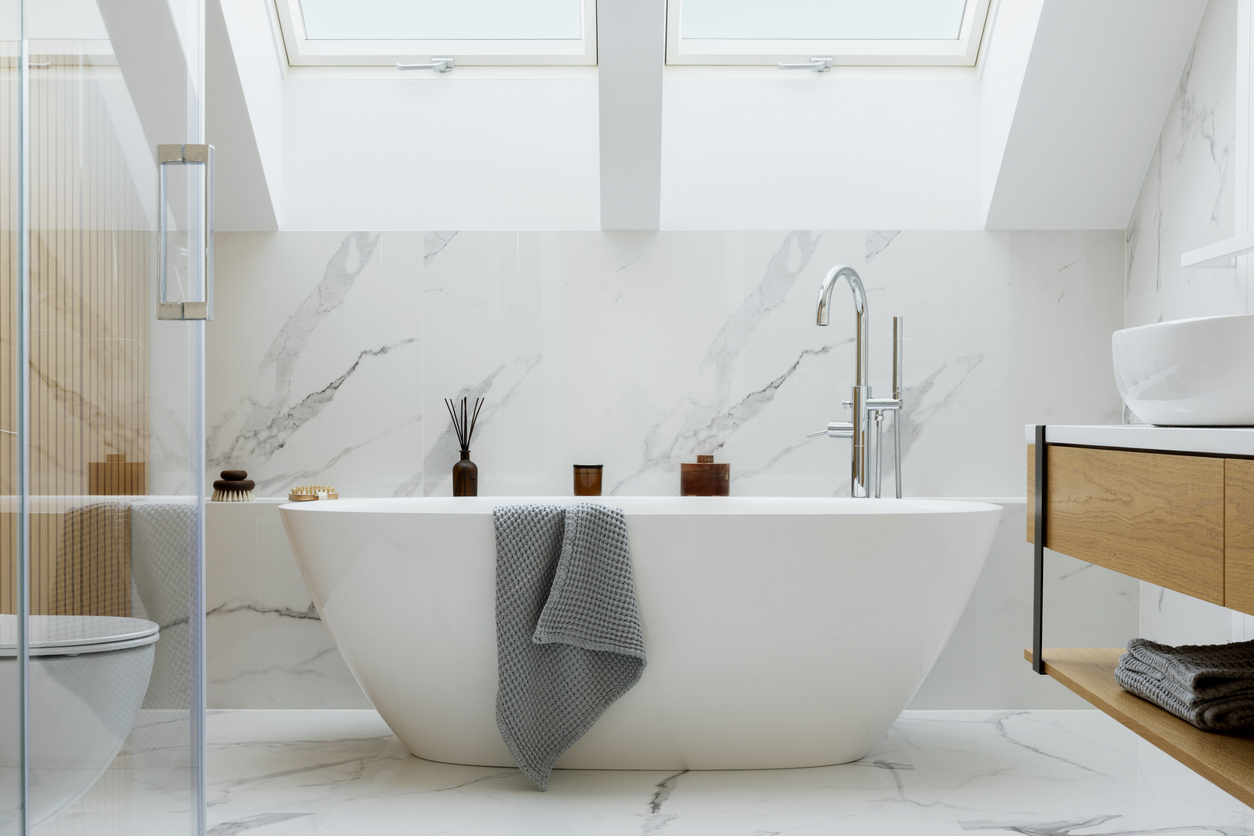
Stone baths often pair beautifully with:
- natural materials
- timber vanities
- textured tiles
- spa-inspired interiors
Resin baths, meanwhile, tend to work well with:
- minimalist layouts
- contemporary fixtures
- large-format tiles
- neutral colour palettes
Thinking about the full design context helps ensure the bath feels integrated rather than out of place.
Exploring Modern Stone Bath Designs
For homeowners drawn to the sculptural look and tactile qualities of stone materials, exploring a range of freestanding stone bath styles can provide valuable inspiration. Seeing how different shapes, finishes, and dimensions interact with modern bathroom layouts often makes the decision far clearer than simply reading product descriptions.
Making the Right Choice for Your Bathroom
Both stone and resin baths represent a step up from traditional bathtub materials in terms of appearance and durability.
Stone offers unmatched visual character and a sense of permanence, while resin provides greater design flexibility and often easier installation.
For many UK homeowners, the right choice depends less on which material is objectively better and more on how the bath fits within the space, the renovation budget, and the way the bathroom will be used every day.
Whichever option you choose, selecting a bath that balances comfort, practicality, and design harmony will ensure the finished bathroom remains enjoyable for years to come.