The UK Business Guide to Hiring in South Africa
.jpg)
Hiring outside the UK used to feel like a strategic growth move, something businesses could plan for over time. Now, for many companies, it has become a necessity. Rising costs, tighter margins, and ongoing pressure around tax and regulation are pushing directors and HR teams to look beyond local talent pools. The opportunity is there, but the hesitation tends to creep in once hiring actually becomes real, especially when the easiest route looks like bringing someone on as a contractor.
On paper, that feels simple. In practice, it is where risk starts to build. If that contractor is working full-time, integrated into your team, and operating like an employee, questions around IR35 and misclassification are hard to ignore. Add cross-border rules into the mix, and things get even less clear.
That is why South Africa is coming up more often in these conversations. It offers access to skilled, English-speaking professionals, a time zone that works well with the UK, and a business environment that feels familiar. The real challenge is figuring out how to hire there properly, in a way that is fast, compliant, and does not leave your business exposed.
The Global Hiring Challenge for UK Firms
Hiring remote staff from other international regions used to be simple. You found someone, sent them a contract, and paid their invoice. Today, it isn’t as easy.. UK companies face two major hurdles:
- IR35 and Misclassification: HMRC is very strict about who is a "contractor" and who is an "employee." If you hire someone in South Africa as a contractor but they work like an employee, you could be liable for back taxes and huge fines.
- The Cost of Local Entities: Setting up a subsidiary in a foreign country is expensive. You need local lawyers, local bank accounts, and local tax registrations. For many small and medium businesses, this cost is too high and it is admin-intensive. Furthermore, it also costs your business a whole lot of money.
Why South Africa is the Best Match for the UK
South Africa is a natural choice for UK businesses. The two countries have a long history and many shared systems.
1. Shared Legal and Business Culture
Both countries share a "Common Law" tradition. This means the way contracts and business rules work is very similar. South Africans also speak English as their primary business language. The work culture is professional and aligns well with UK standards.
2. No Time Zone Fatigue
South Africa is in the same time zone as the UK for half the year. For the other half, it is only two hours ahead. This means your team in Cape Town or Johannesburg works the exact same hours as your team in London.
3. The Commonwealth Connection
Because of the Commonwealth link, many South African qualifications are recognised in the UK. This is very helpful for roles in law, accounting, and engineering.
How an Employer of Record (EOR) Lowers Your Risk
An EOR is the solution to the "contractor vs. employee" problem. Instead of you hiring the person directly, a local South African company employs them on your behalf.
The EOR takes on all the legal responsibility. They make sure the person is paid correctly and that all local taxes are settled. This means you do not need to set up a local office or entity. You get a fully compliant employee without the legal headache.
Understanding South African Labour Law
To show you are a serious employer, you must follow local rules. South African labour law is strict, but a good EOR handles these details for you. Here are three key things to know:
-
The BCEA: This stands for the Basic Conditions of Employment Act. It sets the rules for working hours, overtime, and leave. For example, full-time workers get 21 consecutive days of paid leave per year.
- Notice Periods: You cannot simply end a contract overnight. Most roles require a notice period of four weeks.
- UIF and SDL: Every employee must be registered for the Unemployment Insurance Fund (UIF) and the Skills Development Levy (SDL). These are small payments that provide a safety net for the South African employee.
By following these rules through an EOR, you prove that your company is ethical and compliant. This builds trust with your new staff and keeps you safe from HMRC audits.
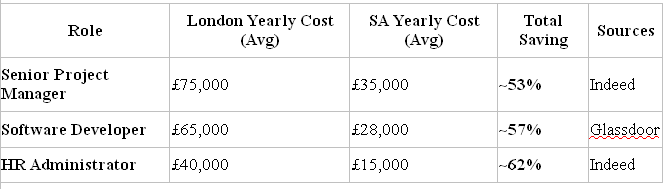
Cost Savings: London vs. Johannesburg
The cost of living in South Africa is much lower than in the UK. This means you can offer a high salary by local standards while still saving your company a lot of money.
Conclusion
UK businesses do not need to fear global hiring - you need the right structure. South Africa offers the talent, the time zone, and the culture that fits the UK perfectly.
Using an Employer of Record in South Africa is the smartest way to scale. It removes the risk of IR35 and lets you focus on growing your business. If you are ready to build a safe, compliant remote team, South Africa is the place to start.

.jpg)