Top Uber Clone Apps for Fast Deployment and Easy Scaling
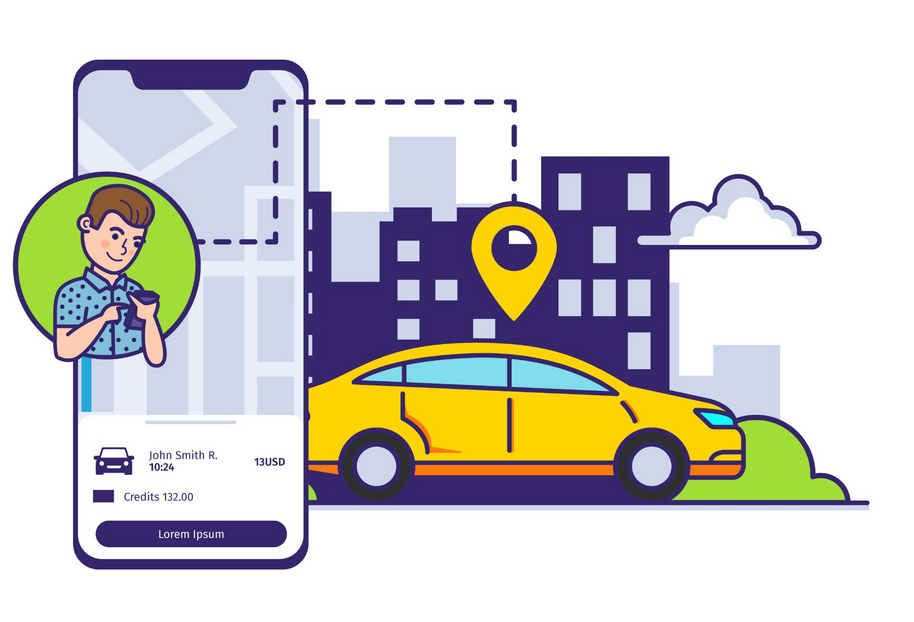
Creating a ride-hailing app from scratch is costly and time-consuming. The development of a fully custom app can take 12 to 18 months, and the cost is hundreds of thousands of dollars, before you even test your market.
Uber clone apps address this issue by providing you with a pre-existing base. You receive all the essential features of ready to go passenger and driver apps, real-time tracking, payment processing, and an admin panel and then tailor it to your brand, location, and pricing scheme.
But not all clone scripts are created equal. Some are obsolete, undocumented, or fail under load. This guide will discuss what really matters when selecting one, and which solution providers to consider seriously.
What Makes an Uber Clone Worth Using
It's important to understand the difference between a good product and a mediocre one before you start looking at providers.
Source Code Ownership
Some vendors sell their software on a subscription basis if you don't pay the monthly fee, you don't get access. Others sell the entire source code. When it comes to building a long-term business, owning the code is important. It allows your team to edit the app as they see fit and avoids relying on a vendor.
Technology Stack and Architecture
The older clone apps were created using monolithic architectures that are not scalable. Modern solutions are based on microservices or at least modular designs, making it much easier to manage traffic growth without having to rewrite the entire system. This focus on modern business growth helps companies build platforms that can evolve alongside changing customer demands. Determine the language and framework that the backend is built on, and ensure that your team can support it.
White-Label Flexibility
By the time you launch, a good Uber clone should look nothing like Uber. Search for apps that offer deep customization, beyond swapping logos and colors, to include booking flows, fare structures, service categories and notification logic.
Multi-Service Support
Many successful ride-hailing startups don't end at cars. They grow into bike taxis, auto-rickshaws, delivery services or parcel logistics. A platform that supports multiple verticals from the start saves you from rebuilding later.
Scalability Infrastructure
The app may be successful when used by 50 users. It's a question of whether it will stand up at 50,000. Ensure that the solution is designed to scale horizontally, preferably on cloud platforms such as AWS, GCP, or Azure, and is optimized for the database and load balancing.
The following are some of the key features that your clone app should have.
Here is a list of questions to ask before signing up for any platform:
- Riders and drivers can be tracked in real time using GPS.GPS tracking of riders and drivers in real time.
- Several payment options such as cash, cards, and local wallets
- A surge pricing engine is a system that adjusts prices according to demand.
- Chat and call between driver and passenger in the app.
- A rating/review system for both parties.
- Earning dashboard for drivers with payout management.
- Admin panel with real-time trip monitoring, user management and analytics.
- Send push notifications using Firebase or similar service.
- Multi-language and multi-currency for regional expansion.
- Promo codes and referral system for growth marketing
If it lacks two or more of these, it's either a stripped down demo or a script that is not seriously maintained.
Deployment Speed: What to Realistically Expect
Marketing copy will tell you that a clone app can be deployed in 24 hours. A demo can be spun up that quickly technically. It takes longer to get a production-ready app with your branding, your payment integrations, your legal requirements, and your server infrastructure.
In reality, a well configured white label deployment takes 2 to 6 weeks. That's still much quicker than custom development, but don't have unrealistic expectations before you sign anything.
Some of the factors that can impact deployment time are the level of customization required, the speed of your team to deliver branding materials, the number of payment gateways you need to integrate, and the need for custom API connections.
Scaling: What Breaks First
The majority of ride-hailing clone platforms are tested in a controlled setting. Real production traffic is more complicated.
Common bottlenecks include:
- How often the app updates the location: If the app is polling GPS every second, and you have thousands of drivers, your backend will be under strain. This is better addressed by solutions that rely on WebSockets or efficient polling intervals.
- Database read/write load: If you have a booking system that is highly concurrent, it requires well-indexed databases and caching layers (such as Redis). Inquire from vendors about their approach to this.
- Volume delivery: Firebase does a great job with notifications, but if you send notifications too quickly, they may not arrive in time.
- Surge traffic can cause payment processing to become a bottleneck due to payment gateway timeouts. Good platforms will gracefully deal with failures by implementing retry logic.
Best Ride Hailing App Solution Companies
The Uber clone market has expanded significantly, from small agencies offering simple scripts to established companies with full-service development and support teams. Let's take an objective look at the ones that stand out.
Uberclone.co
Uberclone.co is a niche solution provider that specializes in just ride-hailing clone products. They offer a white-label app, which is their main product, for entrepreneurs who wish to get a product up and running without having to build it from scratch.
- They have the typical ride-hailing app stack, including a passenger app, driver app, dispatcher panel, and admin dashboard.
- It's helpful if you're not just providing car rides, as it can be used for multiple vehicle types.
- They have an app for Android and iOS, and it's built using React Native for consistency.
- They offer customization as part of their service offering they tailor the app to the local market needs instead of providing a one-size-fits-all solution.
- For startups that want a ride-hailing product without a lot of feature bloat, this is a practical option to evaluate.
Elluminati
Elluminati is a software firm with a few years of experience in the on-demand app space. They are best known for their EMagician and E-Taxi products, which are part of their suite of on-demand app solutions.
- Their ride-hailing solution is usually referred to as E-Taxi, and consists of a passenger app, a driver app, and an enterprise administration panel.
- They're also good at multi-service architecture, meaning that they can support ride-hailing and delivery services on the same platform, which is important if you're looking to run multiple verticals.
- They are available for both Android and iOS platforms, and the admin panel provides operators with valuable control over driver onboarding, pricing, and service zones.
- Elluminati has had experience with clients in Southeast Asia, Middle East and Africa, which has exposed them to markets with different payment methods and language support needs.
- They offer source code with the purchase, which is significant for operators who wish to have full control of the product in the long term.
- Post launch support is available, but as with most vendors in this line of business, the level of support after launch is dependent on the plan you are on.
Eber
Eber is a cloud-based ride-hailing platform that is different from script-based solutions. Instead of selling you code to deploy yourself, Eber is a SaaS product you set up and manage your taxi or ride-hailing business on their hosted platform.
- The benefit of the SaaS model is that you don't have to worry about infrastructure, updates, or scaling. There's no need for a DevOps team.
- They have a platform that has driver apps, passenger apps, a dispatcher interface, and reporting tools.
- The downside is that it doesn't give you as much control as if you owned the source code. However, if you require deep platform modifications, SaaS solutions such as Eber might not be suitable.
- They are more appropriate for operators who wish to operate quickly and with minimal overhead, especially for traditional taxi companies making the switch to app-based dispatch.
Vo2
Vo2 is a white label ride-hailing platform for mid-sized taxi and ride-hailing companies. Their platform has been expanded to accommodate various modes of transportation and can be hosted or self-hosted.
- They have a similar feature set to the bigger guys in this field: real-time tracking, zone pricing, driver management, and analytics.
- They have a cloud-based platform that can be scaled up as needed, taking some of the infrastructure load off the operator.
- Vo2 has shifted its focus from the first-time startup founders to enterprise and mid-market clients, and that's reflected in their pricing and support.
Appdupe
Appdupe is a development company with a variety of clone app products, including a ride-hailing solution. They aggressively sell to startups and small businesses that are seeking a quick-to-market solution.
- Their Uber clone product includes the standard set of apps and an admin panel, with the option for custom feature development on top of the base product.
- They offer several payment options and have developed integrations for markets outside the United States.
- Appdupe also provides industry-specific customizations, such as making the platform suitable for booking ambulances or delivery logistics.
- They provide source code delivery and white-labeling is a standard service, not an add-on.
- They also have a wider range of clone products, not just ride-hailing, so if your business expands to food delivery or home services, you'd be operating in a familiar environment.
When considering any of these companies, request a working demo, ask for client references and specifically inquire about how they have scaled for customers with active driver counts comparable to your target market. Don't rely on a slick demo video for a live product test.
Final Thoughts
Over the last few years, Uber clone apps have come a long way. The most effective solutions are now backed by robust infrastructure, flexible codebases, and support teams that are familiar with the ride-hailing industry in particular. This matters more than ever transport systems globally are being evaluated against goals like efficiency, safety, and universal access, as highlighted in the World Bank's Global Mobility Report, which assessed transport performance across 180 countries.
Any platform you build should be aligned with those same fundamentals. Your task is to find the platform that suits your needs, not the one that has the most features or the lowest price. Consider the market you're going into, the technical ability of your team, and the amount of control you want to have over the platform as you expand. Being quick to market is good, but only if the product you're launching can stand up to real users.


.jpg)