Understanding the Benefits of Diesel Forklifts in Demanding Work Environments
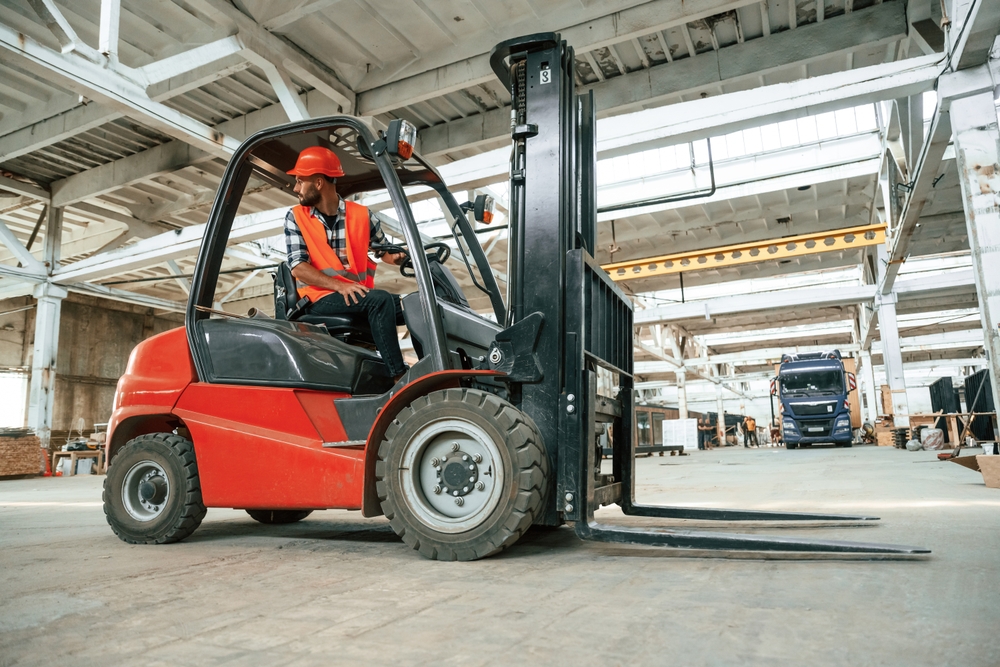
Some job sites don't leave much room for compromise.
Rough ground, heavy loads, long hours, and weather that doesn't always cooperate. In those conditions, the quieter, cleaner appeal of electric equipment tends to take a back seat to something more fundamental: a machine that simply keeps working, shift after shift, no matter what the site throws at it.
That's exactly the territory where the diesel forklift continues to earn its place.
Built for Genuine Power
Diesel engines deliver a level of torque that's difficult to match with electric or LPG alternatives, particularly under sustained heavy loads. This matters enormously in demanding environments where a forklift is regularly lifting at or near its rated capacity, construction sites, timber yards, heavy manufacturing, where underpowered equipment simply can't keep pace with the work.
That power doesn't taper off either. Where a battery gradually loses charge across a long shift, a diesel forklift delivers consistent output from the first lift of the day to the last, which matters considerably when the workload doesn't let up.
Genuine Outdoor and Rough Terrain Capability
Diesel forklifts are built to handle conditions that would challenge lighter equipment considerably:
- Uneven, unsealed ground - common on construction sites, quarries, and outdoor storage yards
- Exposure to weather - rain, dust, and temperature swings that outdoor work inevitably brings
- Heavy-duty tyres and robust build - designed for durability rather than delicate handling
- Stability under load on surfaces that aren't flat, level warehouse floors
For businesses operating primarily outdoors, this durability isn't a nice-to-have, it's the baseline requirement that makes diesel the practical default rather than one option among several.
Fast Refuelling Keeps Work Moving
One of diesel's most practical advantages is how quickly it gets back to work. Refuelling takes minutes, a genuine advantage over the hours an electric battery needs to recharge, particularly for continuous, multi-shift operations that can't afford lengthy downtime between uses.
This matters most in demanding environments where the forklift is one of several pieces of equipment that all need to keep moving in sync. A machine sitting idle waiting to recharge can create a bottleneck that ripples through an entire site's workflow, something diesel simply avoids by design.
Reliability in Remote or Under-Serviced Locations
Not every job site has reliable access to charging infrastructure. Remote construction projects, rural properties, and temporary sites often lack the electrical setup an electric fleet would need to function properly. Diesel sidesteps this entirely, requiring nothing more than a fuel supply, which is considerably easier to arrange and transport to a site than dedicated charging equipment.
This simplicity becomes a genuine advantage for businesses moving between locations regularly, since a diesel forklift doesn't ask much of the site beyond a place to park and a way to refuel.
Where Diesel Makes the Most Sense
A few specific scenarios consistently favour diesel over the alternatives:
- Construction and civil works - where rough terrain and heavy, variable loads are a daily reality
- Continuous, round-the-clock operations - where fast refuelling keeps output steady without interruption
- Remote or temporary sites - where charging infrastructure isn't a realistic option
- Heavy manufacturing and materials handling - where sustained torque under load genuinely matters
In other cases, however, electric or even LPG forklifts may seem much more sensible options: less noisy, environmentally friendly, and economical. However, when it comes to serious challenges, diesel forklifts are still the only equipment designed especially for such purposes.
Considering Diesel Forklift Hire for Demanding Projects
If you need equipment for a demanding short-term project, forklift hire is an ideal way to access a diesel forklift without the upfront investment or long-term commitment of purchasing one. In such a situation, forklift hiring becomes the best option for construction projects, for performing heavy works during a season or just trying to check if it is worth buying a diesel equipment.
This option can be especially useful for businesses that have to perform demanding works outdoors at some moments and light and easy tasks at others.
Matching the Machine to the Environment
In the true power of the diesel forklift is the fact that it does not have to sacrifice anything: power, toughness and productivity - just those characteristics which really count in hard working conditions, where lighter machinery wouldn't be able to compete.
If your business works rough terrains, lifts heavy objects or is in a distant place, then you need the equipment designed specifically for this kind of job, not necessarily the newest one, but the toughest one.