What Should You Know Before Buying an Optometry Practice in Michigan?
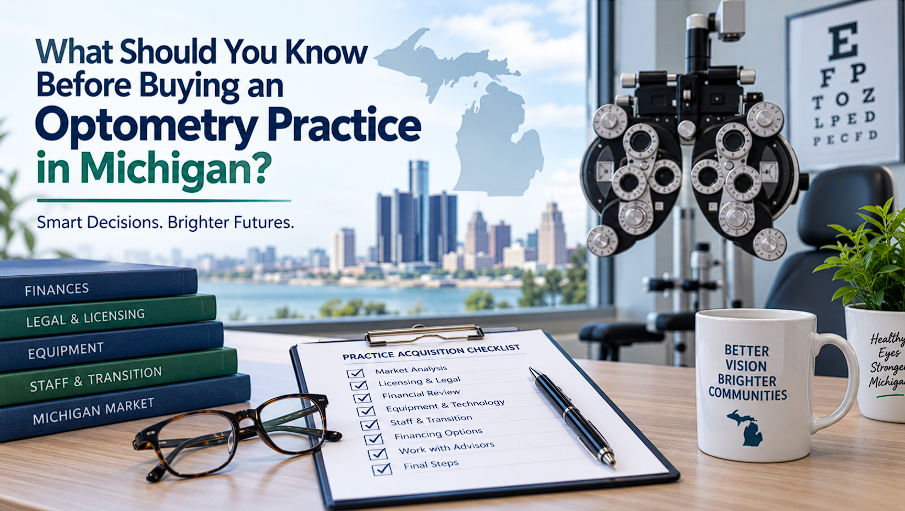
Want to buy an optometry practice in Michigan but don't know where to start?
Buying an optometry practice can be a financially and professionally rewarding investment. It is an exciting step toward long-term career growth and business ownership. You get an existing patient base. You are given pre-installed equipment and a location with a proven track record.
Many individuals are currently interested in buying an optometry practice. However, you must carefully consider your options and important factors if you want to buy an optometry practice in Michigan. Let’s discuss what matters most before you buy an optometry practice.
What You Need to Know About Buying an Optometry Practice in Michigan
- Understand the Michigan Optometry Market
Before buying an optometry practice in Michigan, learn about the local market. Michigan is divided between rural and urban areas. There is higher competition in cities like Ann Arbor, Grand Rapids, and Detroit. Rural areas could have smaller patient pools but less competition.
Keep the following things in mind when analyzing optometry practices in Michigan:
- Population growth in the area.
- The number of nearby competing practices.
- Patient age average and insurance mix.
- Local economic conditions.
A practice located in a growing market could offer stronger long-term opportunities.
- Check Michigan Licensing and Legal Requirements
Michigan has particular laws related to optometrists. You must have an active license through the Michigan Department of Licensing and Regulatory Affairs (LARA). Additional certifications and controlled substance licensure might also be required, depending on the services provided.
Make sure your license is valid and in good standing. Also, verify that the seller's license has no pending complaints. You can consult a healthcare lawyer. They will review your purchase and verify that the practice meets Michigan's state and local regulations.
- Review the Financial Health of the Practice
Don't trust the seller's words alone. Request financial data for at least three to five years. Check balance sheets, payroll reports, income statements, and tax returns. Analyze whether revenue is rising or falling.
Important Financial Records to Ask for:
- Tax returns for the last three years
- Profit and loss statements
- Accounts receivable reports
- Payer mix breakdown (insurance vs. self-pay)
- Lease agreements and equipment loans
Pay close attention to revenue trends. A declining trend requires an explanation. You can also hire a healthcare-savvy accountant to do the analysis for you.
- Inspect Equipment and Technology
Optometry equipment can be costly. OCT devices, retinal cameras, and phoropters are all expensive. Review each asset's age, condition, and maintenance history. Inspect all equipment carefully.
You can ask these questions to understand more about how old or up-to-date the equipment and technology are:
- How old is the current equipment?
- Is anything under warranty?
- Will you need to upgrade technology soon?
- Are electronic health records (EHR) systems modern and transferable?
Outdated equipment and technology can require a large investment after the purchase. Consider this when negotiating.
- Review Staff and Employee Relationships
Experienced employees contribute significantly to operational effectiveness and patient satisfaction. Meet with important team members whenever you can. Find out about their roles, terms of employment, and salary ranges.
Smooth transitions maintain patient loyalty. It also keeps employees productive. Patients often stick with a practice out of trust and habit. Some might leave if ownership is suddenly changed without notice. A planned transition reduces this risk.
- Financing Your Purchase
Many buyers don't make cash payments upfront. They use loans designed especially for the purchase of healthcare practices.
Common Financing Options for Buying an Optometry Practice in Michigan Include:
- SBA loans: Often used for small practice acquisitions.
- Bank loans: Traditional financing through local or national banks.
- Seller financing: The seller agrees to receive payments over time.
Compare the repayment terms and interest rates. A reduced rate can save thousands of dollars over the course of the loan.
- Work With Experienced Advisors
Buying a healthcare practice involves operational, financial, and legal complications. Build a professional advisory group that consists of a healthcare attorney, a CPA with healthcare experience, a practice valuation expert, a commercial lender, and a practice transition consultant.
Experienced advisors can help identify risks and negotiate favorable conditions before the purchase is completed. Besides, get an independent valuation from a professional who specializes in optometry practices. It gives you the power to negotiate.
Final Steps Before Buying an Optometry Practice in Michigan
There are a few last things to complete before you buy an optometry practice in Michigan:
- Finalize your financing.
- Complete due diligence with your attorney and accountant.
- Sign the purchase agreement.
- Notify LARA and update your licensing information.
- Plan your first day of ownership.
Every move should be taken slowly. Buying in a hurry can lead to costly mistakes.
The Last Thoughts!
Buying an optometry practice in Michigan can be a profitable investment when done with careful planning and careful due diligence. Every detail counts, from analyzing patient demographics and financial records to analyzing staff, equipment, and legal requirements. Do your research, ask relevant questions, and consult experts in the field. It will be beneficial for years to come.


.jpg)