What Types of Wholesale Shopping Bags Do Retailers Need in 2026?
.jpg)
In 2026, wholesale shopping bags are no longer just utilities, they are critical to brand identity, regulatory compliance, and sustainability. Driven by stricter environmental laws and eco-conscious consumers, retailers are replacing single-use plastics with sustainable alternatives. Balancing cost efficiency with these demands requires strategic sourcing. Here is a look at the key trends, materials, and strategies defining the market this year.
Key Trends Driving Demand for Wholesale Shopping Bags in 2026
When looking at wholesale shopping bags 2026, several major forces are shaping what retailers choose to stock.
- Sustainability regulations and plastic bans: Governments worldwide are implementing stricter bans and taxes on single-use plastics. Retailers must proactively adopt compliant packaging solutions to avoid fines and operational disruptions.
- Rising demand for eco-friendly shopping bags wholesale: Modern consumers vote with their wallets, and they increasingly prefer recyclable, reusable, or biodegradable materials. Stocking sustainable bags directly influences brand loyalty and customer perception.
- Balancing cost efficiency with sustainability: While eco-materials can sometimes have a higher upfront cost, buying in bulk helps offset the difference. Furthermore, shifting to high-quality reusable bag models can offer long-term savings and extended brand visibility that single-use bags simply cannot match.
Top Types of Wholesale Shopping Bags Retailers Need in 2026
Selecting the right types of shopping bags wholesale depends heavily on your product, margin, and target audience. Here are the leading options for 2026:
Reusable Non-Woven Bags (PP Non-Woven Bags)
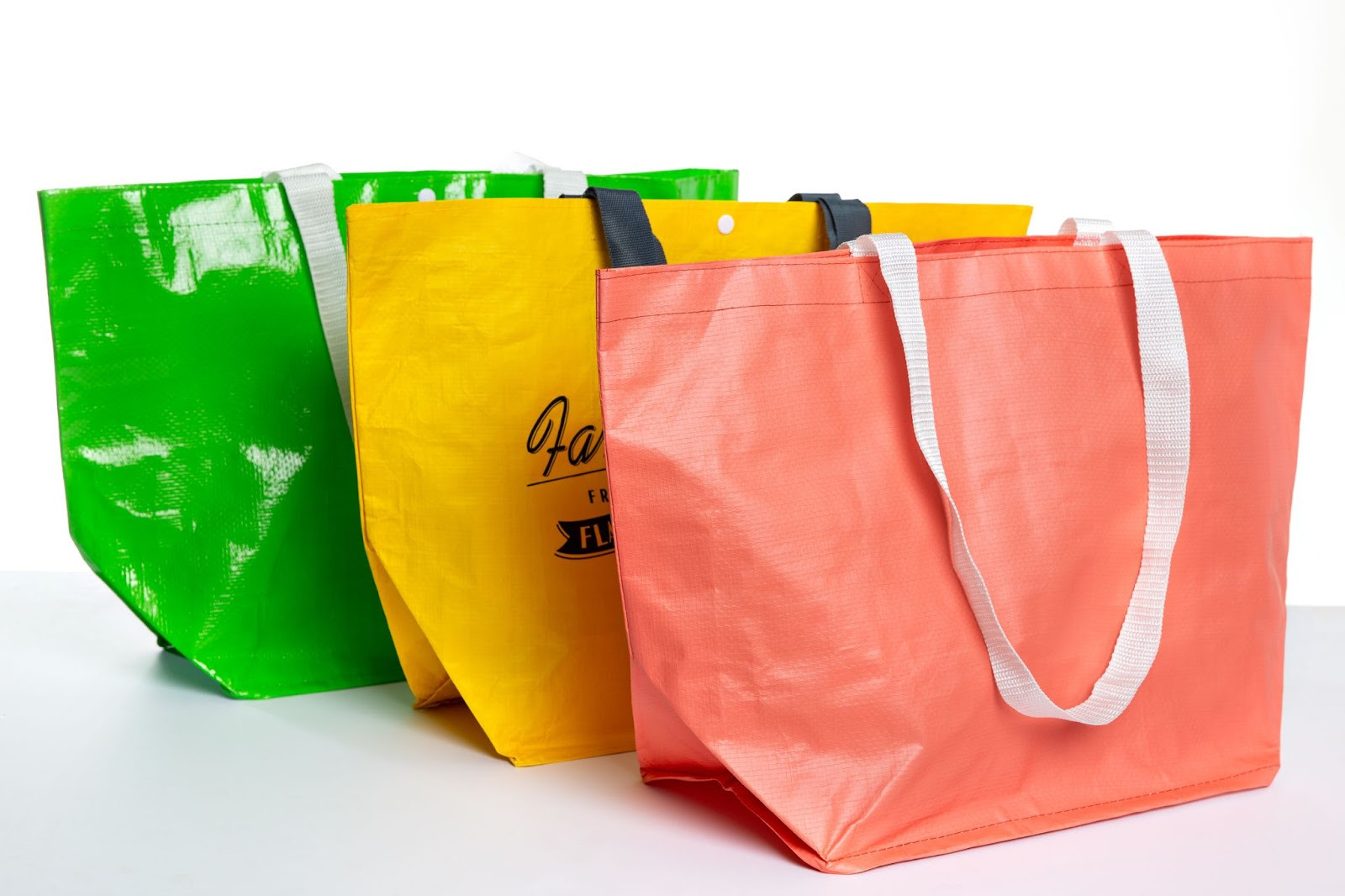
These are the workhorses of the modern retail environment. Lightweight, highly durable, and incredibly cost-effective, they are a staple for supermarkets, grocers, and large-scale retail chains. For instance, high-quality woven PP bags are water-resistant and capable of carrying up to 40 pounds, making them a practical, long-lasting alternative to single-use plastics. Sourcing from a reliable pp woven shopping bags manufacturer like Bk-Bags Manufacturer ensures you have a consistent, reusable option that customers will keep and use for months.
Cotton and Canvas Tote Bags
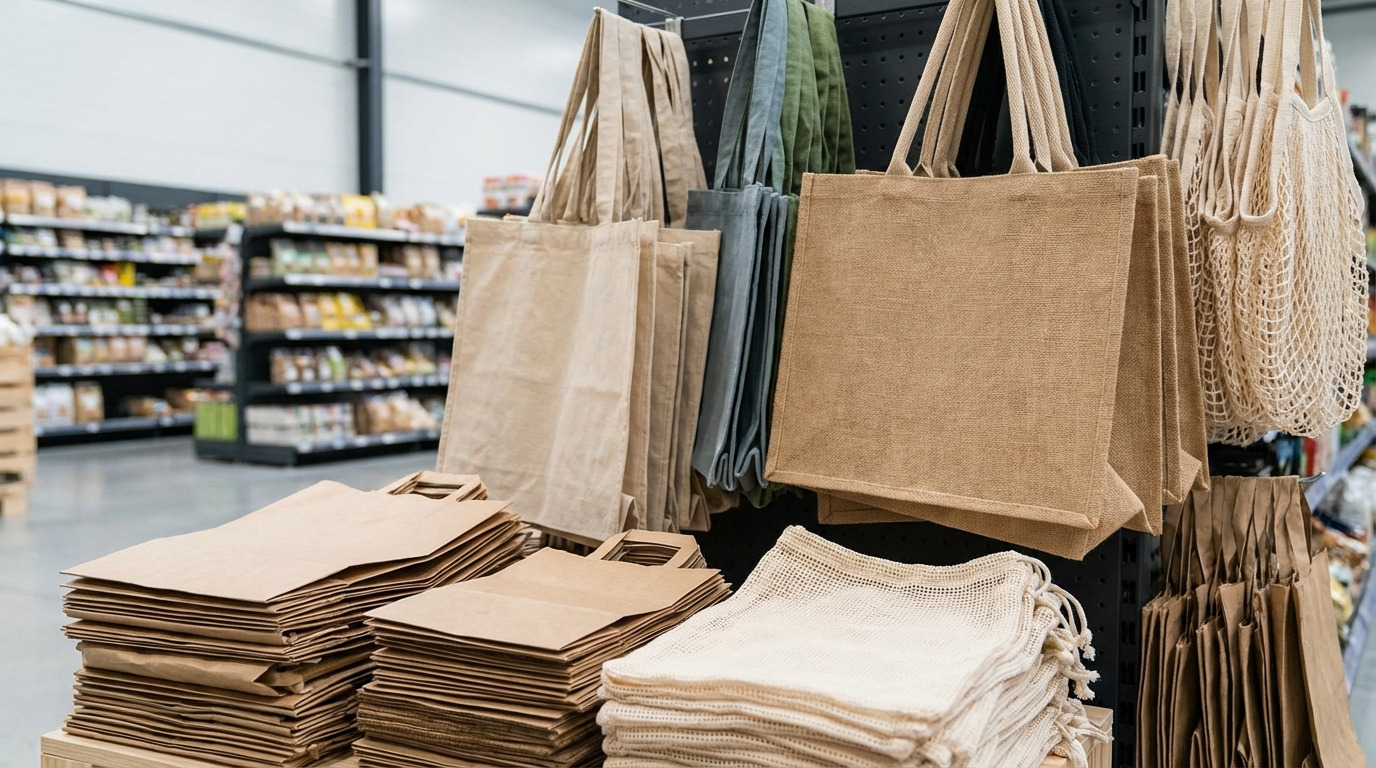
For fashion, lifestyle, and premium eco-conscious brands, cotton and canvas totes are the standard. They offer a premium feel, are highly reusable, and serve as an excellent canvas for custom branding. Investing in canvas tote bags wholesale provides a product that customers often treat as an accessory rather than just packaging.
Kraft Paper Bags (Recyclable & FSC-Certified)
Kraft paper remains a massive player across the general retail and food service sectors. They are easy to customize, structurally sound, and widely accepted in curbside recycling programs. When buying paper shopping bags wholesale, looking for FSC-certified options guarantees the paper is sourced from responsibly managed forests.
Biodegradable and Compostable Bags
Made from plant-based materials like PLA, PBAT, or cornstarch, these bags are ideal for retailers prioritizing a zero-waste ethos. Sourcing biodegradable shopping bags wholesale is a strong move for brands whose core customer base is highly focused on environmental impact.
Luxury Laminated Paper Bags
Premium retail segments, such as cosmetics, jewelry, and boutique apparel, require packaging that matches the product inside. Luxury laminated bags offer high-end finishes (like foil stamping or embossing) that significantly enhance brand perception and the unboxing experience.
Recycled Plastic (rPET) Shopping Bags
Produced from post-consumer recycled materials like plastic bottles, rPET bags actively support circular economy initiatives. Choosing recycled shopping bags wholesale gives plastic a second life. Notably, innovative uncoated rPET options are gaining traction because, without a lamination layer, the bag remains 100% recyclable at the end of its life, creating a true closed-loop product .
How to Choose the Right Wholesale Shopping Bags for Your Retail Business
If you need to choose wholesale shopping bags this year, a one-size-fits-all approach won't work. You need to align your packaging with your specific operational needs.
- Understand your retail segment: A grocery store needs high load capacity and moisture resistance, while a luxury boutique prioritizes aesthetics and crisp finishes.
- Evaluate sustainability certifications: Don't just claim your bags are green—prove it. Look for suppliers offering FSC (for paper), GRS (Global Recycled Standard for plastics), OEKO-TEX (for textiles), or EN13432 compostability standards. This ensures regulatory compliance and builds consumer trust.
- Maximize customization and branding: Your bag is a walking billboard. Consider which printing methods (flexo, offset, or screen printing) work best for your chosen material to ensure maximum logo visibility and marketing value.
- Assess supplier reliability: Look closely at bulk pricing, Minimum Order Quantities (MOQs), and lead times. Consistent quality across large orders is vital to maintaining your brand image.
Wholesale Shopping Bag Materials Comparison (2026 Guide)
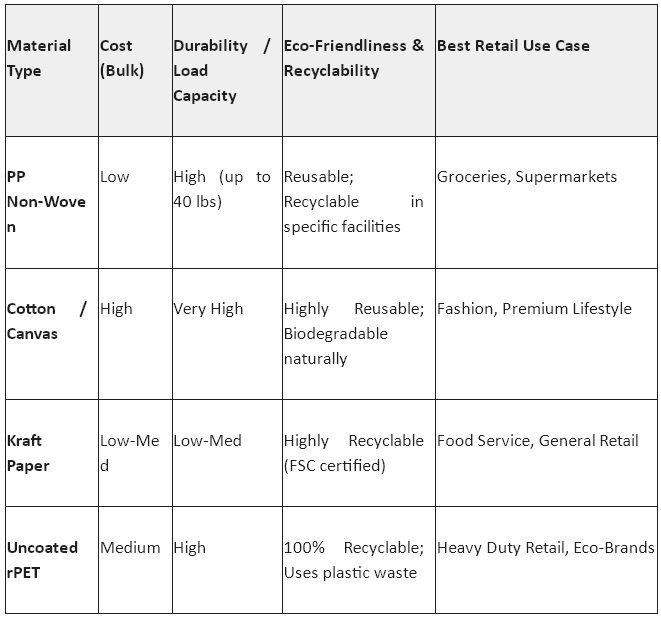
When looking at a shopping bag materials comparison, retailers must weigh several factors to find the right balance for their bottom line and the planet. Selecting the right reusable bag material is essential for providing businesses with packaging that is robust enough for repeated use without compromising on ecological values.
Paper vs Plastic vs Fabric Bags
- Paper: High recyclability and low cost, but lower durability and a higher initial carbon footprint during manufacturing.
- Plastic (Single-use vs rPET): Traditional plastic is cheap but faces intense regulatory pushback. rPET offers excellent durability and utilizes existing waste, though it requires specific recycling facilities at the end of its life.
- Fabric (Cotton/Canvas/Non-woven): Highest cost per unit but unbeatable durability and brand longevity.
Lifecycle and Reusability Analysis
The true environmental impact of a bag comes down to how many times it is used. A cotton tote has a higher production carbon footprint than a single-use plastic bag, but if a customer uses that tote a hundred times, its per-use impact drops drastically. Retailers should focus on multi-use efficiency over single-use convenience whenever possible.
Custom Wholesale Shopping Bags as a Branding Tool
Never underestimate packaging as a marketing channel. Custom shopping bags wholesale act as mobile advertisements, boosting brand recall long after the customer has left the store.
Looking at design trends for 2026, minimalist and explicitly eco-conscious designs are leading the way. Consumers prefer clean aesthetics printed with sustainable, water-based inks. Additionally, smart packaging is on the rise; integrating QR codes onto bags allows brands to link customers directly to loyalty programs, recycling instructions, or exclusive digital content.
Wholesale Shopping Bags Sourcing Trends for 2026
The logistics behind wholesale packaging trends 2026 are also evolving rapidly.
- Nearshoring vs. Overseas Manufacturing: Retailers are increasingly weighing the trade-offs between the lower costs of overseas production and the speed, reliability, and lower transport emissions of nearshoring.
- Digital B2B Procurement Platforms: Sourcing is becoming streamlined. Digital platforms make supplier comparison, credential checking, and procurement faster and more transparent.
- Automation and Sustainable Production: Manufacturers are utilizing AI-driven processes to minimize fabric and paper waste during production, driving efficiency improvements that help stabilize bulk pricing for buyers.
Conclusion: Preparing Retailers for the Next Generation of Shopping Bags
The types of wholesale shopping bags dominating 2026, from non-woven and rPET to FSC-certified kraft paper, all share a common thread: a move toward sustainability, compliance, and stronger branding. By carefully selecting materials that align with your retail segment and partnering with reliable, certified suppliers, you turn a simple carrying device into a competitive advantage. Retailers who adopt high-quality, eco-friendly packaging early will not only stay ahead of regulations but also secure the loyalty of the modern, conscientious consumer.
Frequently Asked Questions (FAQ)
What is the most popular type of wholesale shopping bag in 2026?
Reusable non-woven bags and kraft paper bags are expected to dominate due to cost efficiency and sustainability compliance.
Are biodegradable shopping bags better than paper bags?
They can be more sustainable in the right conditions but depend on proper composting infrastructure.
What certifications should retailers look for in eco-friendly shopping bags?
Key certifications include FSC, GRS, and EN13432 compostability standards.
How can retailers reduce costs when buying wholesale shopping bags?
Bulk ordering, standardized sizes, and long-term supplier partnerships help optimize costs.
Why are custom shopping bags important for retail branding?
They increase visibility, reinforce brand identity, and enhance customer experience.