Why Multi-Factor Authentication Strengthens Physical Security
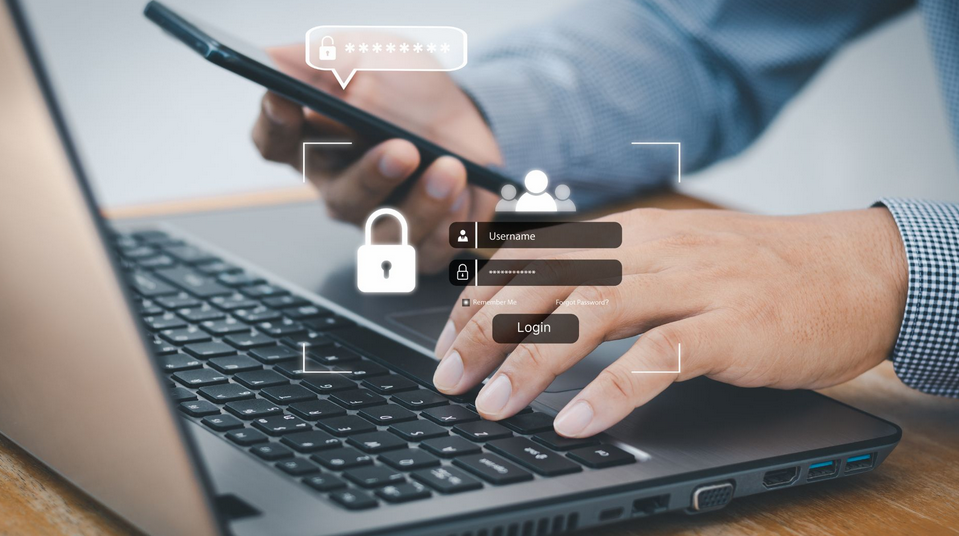
Physical security has always had one core job: keep the wrong people out. But here's the uncomfortable truth: locks, PINs, and keycards aren't holding up the way they used to. Multi-factor authentication is stepping in, and it's doing so faster than most people expected.
When MFA adoption in France leapt from 29% to 71% in a single year (TechRadar, 2026), it wasn't just a statistic. It was proof that people will embrace stronger security when it's designed thoughtfully. That same logic now applies directly to how organizations protect their buildings, server rooms, and restricted access areas.
Bringing MFA Into Your Building Access Infrastructure
Legacy systems were built for a different threat landscape. A cloned badge or a borrowed PIN can open a restricted floor without triggering so much as a notification. That's not a hypothetical scenario, it happens.
Organizations upgrading their building access control systems are finding that integrating MFA closes those vulnerabilities in ways that are both practical and scalable. Modern readers now combine smart cards, mobile credentials, biometrics, and PINs, sometimes all within a single authentication flow.
The Technologies Doing the Heavy Lifting
NFC, Bluetooth proximity, and biometric readers aren't futuristic anymore. They're deployed right now in corporate campuses, healthcare facilities, and co-working spaces. An employee taps a smart card and scans a fingerprint. A visitor receives a mobile push notification credential. It all happens in seconds, with a security depth that a single keycard simply cannot replicate.
How Organizations Are Actually Using This
- Critical infrastructure sites often require two or three sequential authentication steps before anyone enters a server room.
- Co-working spaces pair mobile credentials with facial recognition to manage hundreds of rotating members without issuing physical cards.
- Corporate buildings route employees through different authentication paths depending on clearance level seamlessly.
These aren't pilot programs anymore. They're an operational reality.
A Smarter Era for Physical Security
Nobody woke up one morning and decided single-factor access was a disaster. The shift was gradual, a badge here, a PIN there. For years, that felt like enough.
It isn't anymore.
Insider misuse, cloned credentials, and social engineering aren't edge cases. They're everyday threats. And they expose just how fragile single-layer systems really are once someone motivated decides to probe them.
Multi-factor authentication approaches physical security differently. Instead of one check at the door, it demands multiple independent verifications simultaneously. Something you know. Something you have. Something you are. Together, those layers create a barrier that's genuinely harder to defeat.
From Physical Keys to Verified Identity
Think about how far access technology has traveled. Physical keys gave way to magnetic stripes. Magnetic stripes gave way to proximity cards. Each iteration offered more convenience but also introduced new weaknesses.
Today's MFA-enabled systems don't just add another layer for the sake of it. They address fundamentally different attack vectors at once, which is what makes them so effective.
Compliance Is No Longer Optional
If you operate in healthcare, finance, or government, you already know this. Access gaps aren't just security risks, they're regulatory liabilities. MFA supports compliance with HIPAA, PCI-DSS, and GDPR by generating verifiable, time-stamped access records that hold up under audit scrutiny. That paper trail matters more than most people realize until they're sitting across from an auditor.
What MFA Actually Delivers for Physical Security
The benefits reach further than swapping a keycard for a fingerprint scan. They touch every layer of how a facility operates, from routine morning entry to emergency response protocols.
Stopping Social Engineering at the Door
Social engineering is routinely underestimated in physical security conversations. Someone tailgates through a door. Someone borrows a badge. Someone talks their way past a single checkpoint. These tactics work because single-factor systems have one point of failure.
MFA eliminates that. When two or three independent factors must align simultaneously, social manipulation stops being a viable strategy. Real-world deployments have shown that even partial MFA rollouts produce meaningful reductions in unauthorized entry incidents.
Layered Protection That Works in Real Time
The phrase "enhance security with MFA" gets used so often that it almost loses its meaning. But the underlying reality is concrete: biometric and security key usage grew 158% year-over-year as organizations moved toward higher-assurance authentication (Biometric Update, 2024).
Each factor, what you know, what you have, what you are, addresses a different attack surface. That same layered structure also generates detailed audit logs that make incident investigations significantly faster.
Compliance and Operational Resilience
Beyond active threat prevention, MFA quietly supports business continuity. Every access event, logged and tied to a verified identity, simplifies regulatory reporting under GDPR, HIPAA, and PCI-DSS. From an insurance perspective, documented access controls reduce liability exposure and demonstrate measurable due diligence to auditors.
Where MFA Technology Is Headed
Innovation in this space isn't slowing down. It's accelerating.
Biometrics Are Getting More Capable
Facial recognition, palm vein scanning, and voice biometrics accuracy levels now support high-security deployment without the friction those methods carried even five years ago. Privacy-conscious organizations can implement on-device biometric processing, meaning no raw data is stored centrally. That architecture addresses security and compliance concerns in a single design decision.
Your Phone Is Now a High-Security Credential
Push notifications, NFC taps, QR codes, Bluetooth proximity, the smartphone in someone's pocket is already one of the most capable access keys available. Wearable credentials are gaining ground too, particularly in environments where hands-free access is operationally important.
AI Is Making Access Control Predictive
When machine learning layers onto MFA infrastructure, physical security stops being purely reactive. Behavioral biometrics analyzes movement patterns. Anomaly detection flags unusual access attempts before a breach occurs. Adaptive authentication can demand additional verification when something looks off, such as an unusual hour, an unrecognized device, or an atypical access route.
Putting It Into Practice
Knowing what's possible is one thing. Building a working system is another.
Start with a genuine risk assessment. High-security zones likely need biometrics plus a PIN. Lower-risk areas might function perfectly well with a mobile credential and a single tap. Calibrating authentication requirements to actual risk levels keeps security strong without creating unnecessary daily friction.
Adoption matters as much as technology. The most sophisticated system stalls if people resist using it. Clear onboarding, straightforward training, and an intuitive user experience reduce pushback considerably. Open-architecture controllers and solid API compatibility also protect your investment. Proprietary ecosystems have a habit of limiting future options at the worst possible moments.
Results That Speak for Themselves
A regional hospital network deployed biometric MFA at pharmacy and records access points. Within six months, unauthorized access attempts dropped by more than 60%. Audit preparation time was cut in half because every entry was automatically logged and verified.
A national co-working brand rolled out mobile MFA across 40 locations. Tailgating incidents became nearly nonexistent. Compliance audits got faster and more consistent across every site.
Neither outcome was accidental. Both resulted directly from structured MFA deployment, thoughtful onboarding, and the right technology fit for each environment.
The Larger Trajectory
Organizations leading in physical security aren't stopping at MFA. Decentralized identity, blockchain-based credentials, and zero-trust access models are already moving from concept to deployment. The multifactor authentication market was valued at $21.11 billion in 2025 and is projected to reach $51.96 billion by 2031 at a 16.20% CAGR (Mordor Intelligence, 2026).
That trajectory tells you something important: the organizations investing in flexible, MFA-capable infrastructure now will be significantly better positioned for whatever comes next. Waiting isn't a neutral decision; it's a compounding risk.
Quick Answers to Common Questions
Can MFA work across multiple sites?
Yes. Cloud-managed platforms allow centralized administration across unlimited locations, with credentials and policies updatable in real time.
What does upgrading typically cost?
It varies by facility size and technology. Phased deployments help manage budgets, and long-term savings from reduced incidents often offset initial investment considerably.
How do biometric systems handle privacy compliance?
Many process data locally on-device without storing raw biometric templates centrally, an architecture that aligns directly with GDPR and similar frameworks.

.jpg)