Why Preventive Maintenance is the Backbone of Efficient Industrial Facilities
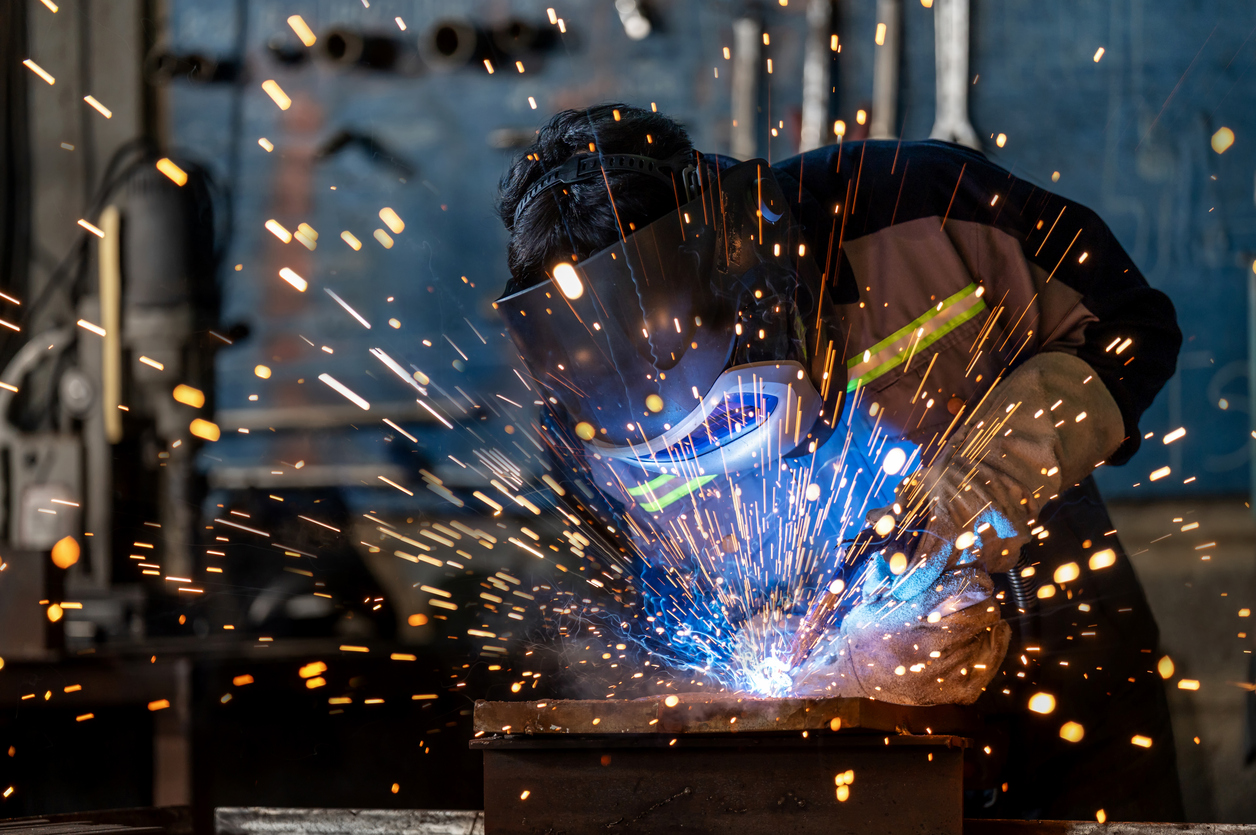
Reactive maintenance may seem less costly unless you consider all the associated expenses. For example, when essential fabrication machinery breaks down during a production run, you're not only covering the repair costs but also the lost production costs, the high labor costs for urgent work, the expedited parts costs, and the impact on all subsequent processes.
By moving from a run-to-failure approach to a planned preventive maintenance strategy, you don't reduce costs, you just turn unplanned, emergency costs into planned ones.
What Unplanned Downtime Actually Costs
The numbers paint a clear picture. Poor maintenance practices can lower a plant's productive capacity between 5% to 20%, while unplanned downtime can lead industrial manufacturers to lose approximately $50 billion annually (Deloitte).
However, these numbers are not solely the consequences of major breakdowns. The majority results from the accumulation of various smaller failures that were preventable: a component that was not cleaned or lubricated as needed, a piece that reached the end of its service life, a damaged tip that produced a bad weld and ruined the entire batch, causing everyone to rush or neglect the maintenance so as not to halt production.
These are not accidental failures, but rather the normal consequence of postponing maintenance because nobody wanted to stop the production line.
Parts Availability Is Where Programs Fail In Practice
A good preventive maintenance strategy is all well and good, but it can be disheartening if you lose a day on every maintenance window for want of a 20-dollar consumable that wasn't there because you didn't plan for it. Not because you're stuck for maintenance staff, but because a 10-dollar part wasn't in the right place at the right time.
Industrial consumables - electrodes, nozzles, contact tips, shielding gases, liner assemblies - have short service lives in high-output environments. They need to be treated as planned expenditure, not reactive purchases. For fabrication operations in Western Australia, sourcing high-quality, local welding supplies perth reduces the lead time risk that can turn a one-day scheduled shutdown into a week-long delay waiting on freight.
Local supply chains aren't just convenient - they're a structural advantage in a region where isolation can amplify every logistics problem.
Calibration, Wear, And The OEE Connection
Machinery functions are constantly under mechanical, thermal, and environmental stresses in heavy fabrication environments. Heat cycles, vibration, friction, and particulate contamination degrade components in ways that aren't always visible until something stops working. The goal of a preventive maintenance program is to intervene before degradation reaches the failure threshold.
For welding systems specifically, this means regular calibration of power sources and wire feeders to ensure they're operating within specified parameters. A welder running outside its calibrated range produces inconsistent results - and in structural or pressure-vessel fabrication, that means non-destructive testing failures, rework, and potential safety exposure.
Overall Equipment Effectiveness is the metric that makes this tangible. OEE measures availability, performance, and quality together. Consistent preventive maintenance raises all three. It reduces unplanned stops, keeps machinery running at designed speeds, and maintains the output quality that prevents scrap and rework. Facilities that track OEE against their maintenance frequency almost always find a direct correlation.
Safety Compliance Isn't A Separate Conversation
In some operations, maintenance scheduling and safety compliance are seen as two separate things that only sometimes overlap. But neglecting the high-pressure system, structural weld, or electrical enclosure inspections that regularly coincide with maintenance is how you invite catastrophe. It's not a paperwork exercise, or a trivial cost to cut.
These industrial and occupational safety and health frameworks are hard-won. They arise as a collective human response to the exact failures that can occur when you defer maintenance on the equipment that's pushed as hard as it can go. A hydraulic line that's under pressure, a structural weld after a life with many cycles, an electrical enclosure after a high-vibration or thermal event - these are the exact failure modes.
They are not the outlandish "one in a million" events. They are guaranteed failure modes if you ignore the real-world maintenance requirements of equipment that is being pushed to its environmental limits.
Move From The Calendar To The Data
Saying "we service this every three months" is better than nothing, but it's a rough approximation. Equipment that runs two shifts a day in a hot, dusty environment degrades faster than the same model running one shift in a controlled environment. If you apply the same schedule to both, you're wasting money on unnecessary maintenance for one and likely underservicing the other.
With run-hour tracking, you can advise dependent process owners when their equipment is coming due for maintenance. This results in less disruption of production for the process owner, since maintenance time can be scheduled at a convenient time for both operations and maintenance.
Mean Time Between Failures data, gathered and analyzed correctly, also helps predict the right interval for your maintenance rather than letting the factory reps set standards based on what they think they can get away with or, much worse, letting your team set it based on how many hours are available in the week. Then sending the foreman a case of beer when they get it running again.
The facilities running at the highest acceptable output with the lowest unplanned downtime aren't the ones with the newest equipment. They're the ones where you've got the most consistent maintenance culture. And that will look different at every facility.