Why Professional Asbestos Testing Matters for Businesses
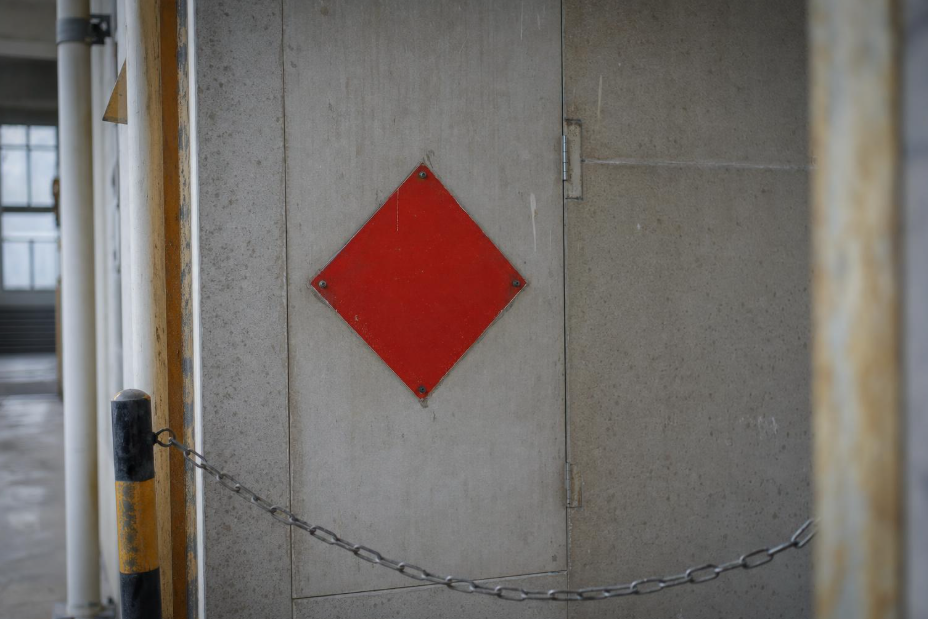
Asbestos risk can seem remote until a product alert or building project creates an immediate problem. Asbestos found in imported fire door components prompted a coordinated response from WorkSafe New Zealand and MBIE, and affected sites remained closed until independent clearance certificates were obtained.
WorkSafe has also advised that recalled coloured sand be managed as friable asbestos-containing material (ACM), triggering Class A removal and clearance requirements. Neither risk came from a demolition site. Both arrived through the supply chain.
Workplace asbestos risk management involves identifying asbestos, recording its location and condition, controlling exposure, and documenting that the work was completed correctly. Accurate testing sits at the start of that process, and mistakes can cause costs and delays that rarely appear in the initial quote.
Key Takeaways
- The health risk is serious. WorkSafe describes asbestos as New Zealand's leading cause of workplace-related deaths, with about 220 people dying from preventable asbestos-related disease each year.
- Building age is an important first check. Buildings constructed before 1 January 2000 are more likely to contain ACM.
- A written plan may be a legal duty. Where asbestos is present or likely to be present, including in soil or as naturally occurring asbestos, a PCBU must prepare an accessible asbestos management plan and review it at least every five years.
- Removal requirements depend on the material and scale. Up to 10 m² of non-friable asbestos may be removed without a licence in specified circumstances. Larger non-friable jobs require a Class A or Class B licensed removalist, while friable asbestos requires a Class A licence.
- Guidance changes matter. WorkSafe guidance dated 17 April 2026 calls for continuous air monitoring during Class A removal until clearance, along with a four-stage clearance process. It also states that swab samples must not be used to identify asbestos during surveys.
- Competence matters. A competent person should carry out sampling, with analysis completed by a laboratory recognised through IANZ or NATA accreditation.
The legal baseline every PCBU should know
Under New Zealand's health and safety framework, a person conducting a business or undertaking (PCBU) with management or control of a workplace must identify asbestos or ACM that is present or likely to be present, so far as reasonably practicable. Where asbestos has been identified or is likely to be present, the PCBU must prepare a written asbestos management plan (AMP).
An AMP needs more than a simple declaration. It should record the location and condition of ACM, decisions about managing the risk and the reasons for them, procedures for incidents and emergencies, and information about worker training and health monitoring. It must be readily accessible to workers, other PCBUs operating at the site, and health and safety inspectors. It must also be reviewed at least every five years, or sooner if conditions change.
When several businesses share a site, such as a landlord, tenant, and contractor, their duties can overlap. They should consult, cooperate, and coordinate early so everyone works from the same asbestos register instead of relying on separate, incomplete records.
When to bring in professionals, and how to choose them
Some warning signs are obvious, while others are easy to miss. Bring in qualified help when premises predate 2000, refurbishment or demolition is planned, suspected ACM appears damaged, soil will be excavated, or a supplier alert identifies a product already installed or in use. The fire door and coloured sand incidents show why supplier notices deserve the same attention as building surveys.
If your premises were built before 2000 or you're planning refurbishment, professional asbestos checking services NZ can arrange accredited sampling, appropriate surveys, and independent clearance where required. Providers such as SQN can help businesses coordinate these steps. When comparing providers, check that sampling is completed by a competent person and analysis is performed by an IANZ or NATA-recognised laboratory.
Do-it-yourself sampling is generally a poor choice and is inappropriate for friable material. Cutting or breaking material to collect a sample can create the exposure you were trying to assess.
What professional testing and assessment actually involves
Professional asbestos work generally involves several distinct steps:
- Management survey: Identifies and records ACM that will remain in place during normal occupation. The findings feed directly into the AMP.
- Refurbishment or demolition survey: Uses more intrusive inspection methods before cutting, stripping, or demolition begins.
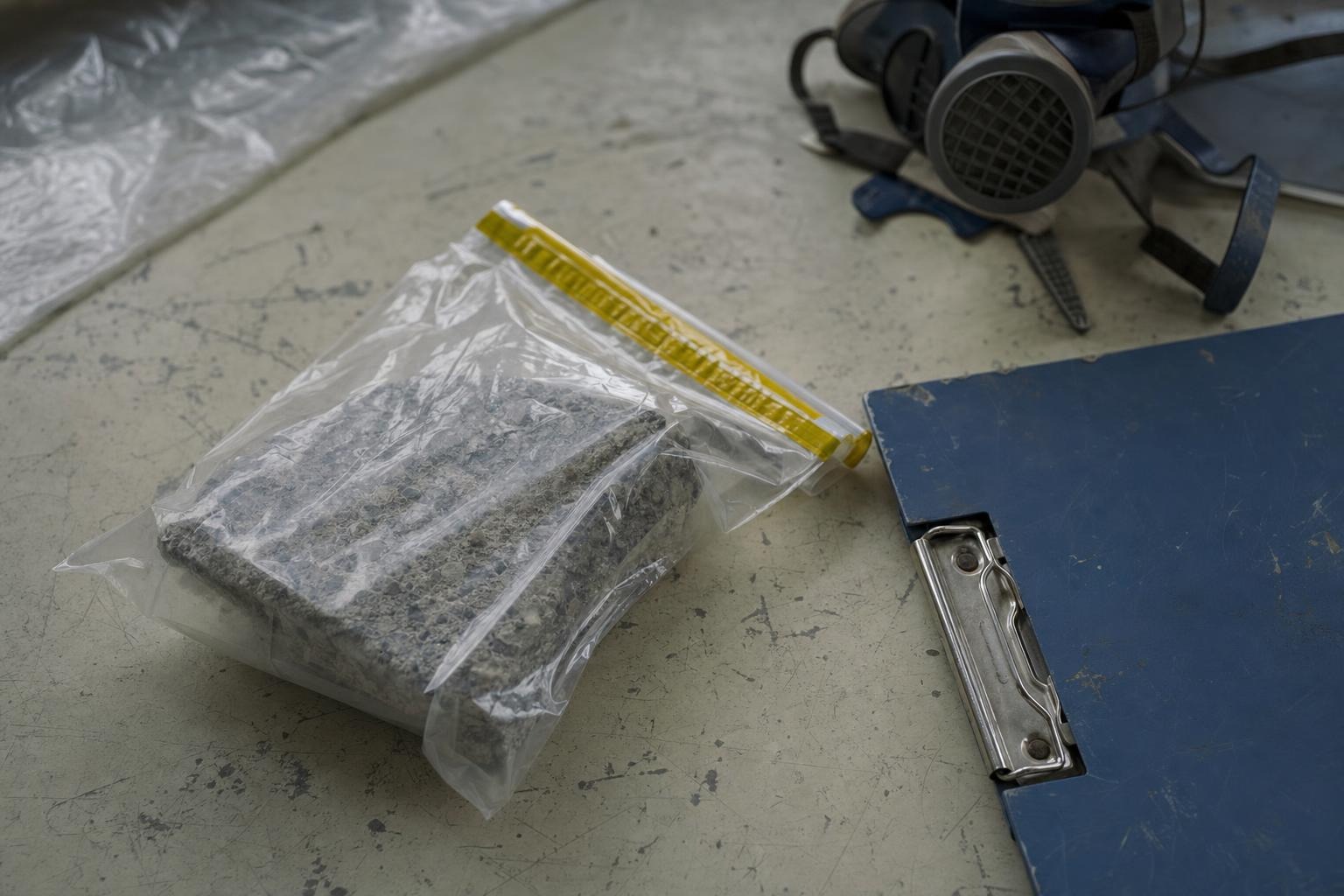
- Bulk sampling and analysis: Involves physical samples taken by a competent person and analysed by an accredited laboratory. Current guidance does not accept swab samples as a way to identify asbestos during surveys.
- Air monitoring: WorkSafe guidance dated 17 April 2026 requires continuous air monitoring during Class A removal work through to clearance.
- Clearance: After Class A removal, the commissioning PCBU must obtain a clearance certificate from a licensed asbestos assessor under the Health and Safety at Work (Asbestos) Regulations 2016. The guidance sets out a four-stage clearance process.
The important distinctions are competence, licensing, and independence. A competent person can take samples, but only a licensed asbestos assessor can issue a Class A clearance certificate. That assessor should be independent of the removalist completing the work.
Building and maintaining the asbestos management plan
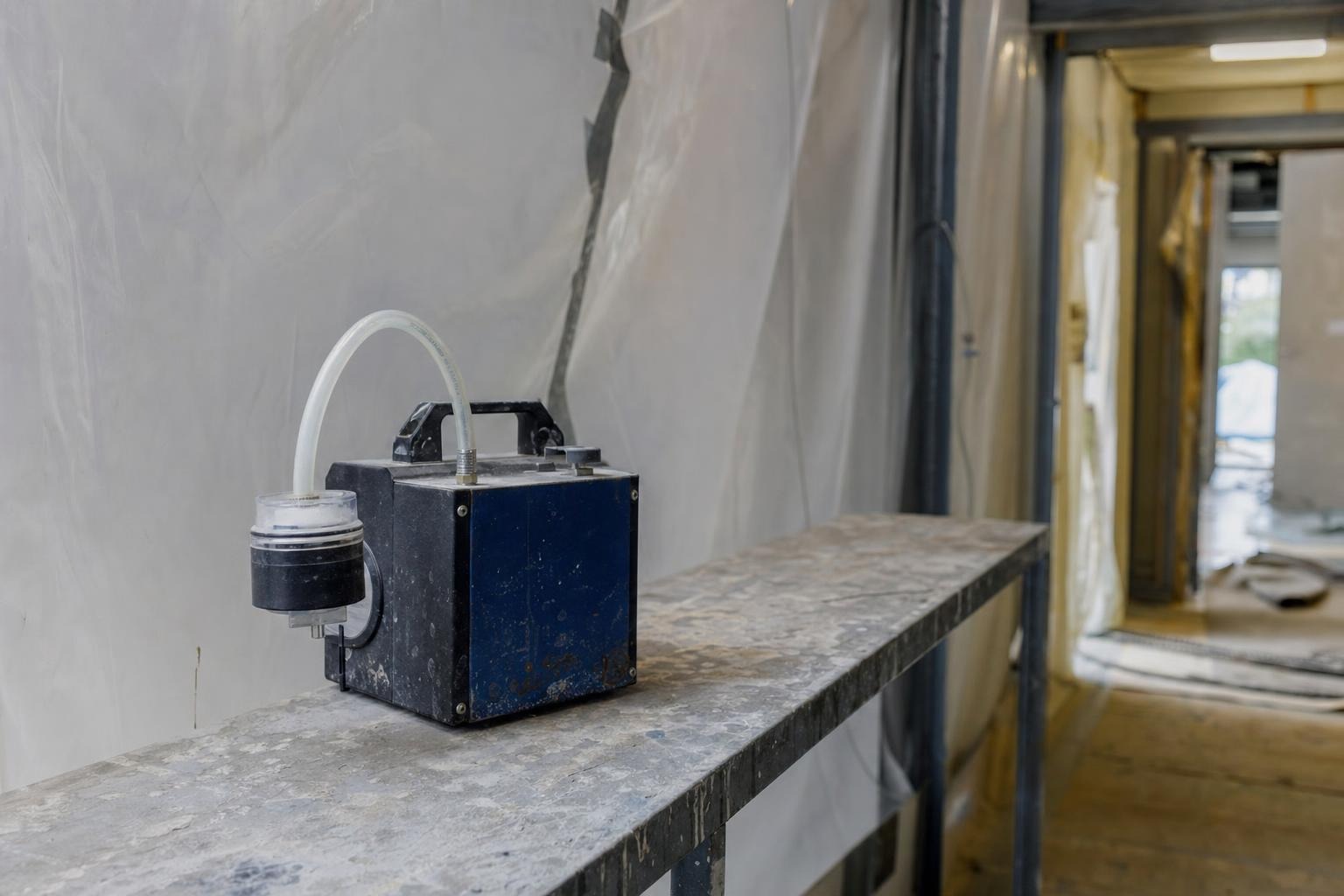
Treat the AMP as a working document rather than a file kept only for compliance. A practical plan should include site details and the responsible person; an asbestos register listing locations, material types, and condition; risk decisions and their reasoning; controls such as labelling, sealing, or enclosure; procedures for accidental disturbance; contractor induction requirements; training and health-monitoring records; and a review log.
Store the plan where workers and contractors can access it. Update it whenever removal, sealing, enclosure, or building work changes the risk. Schedule the five-year review in advance so the plan doesn't quietly become outdated.
Three scenarios businesses run into
Small non-friable maintenance. Removing up to 10 m² of non-friable material may not require a licence, but the work still needs suitable controls. These can include trained workers, dust suppression, restricted access, correct waste disposal, and decontamination. The licensing exception does not remove the duty to manage exposure.
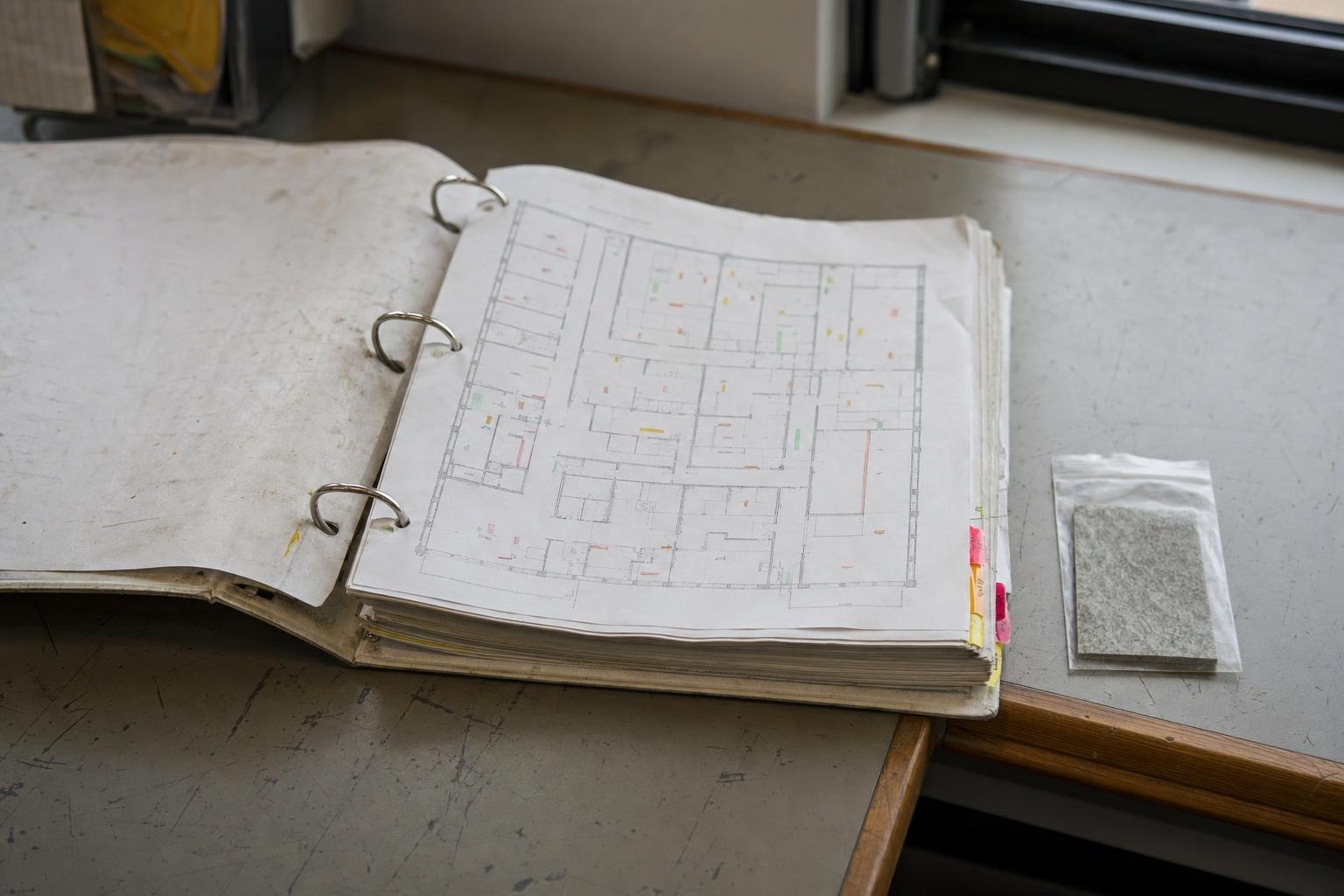
Class A friable removal. Friable work requires a Class A licensed removalist, regulator notification, suitable containment and negative pressure where required, continuous air monitoring through to clearance, and a clearance certificate from an independent licensed assessor.
Refurbishment or demolition. Complete the appropriate survey before anyone cuts, drills, strips, or demolishes building materials. A survey commissioned after work starts becomes part of the response to a potential exposure rather than a preventive control.
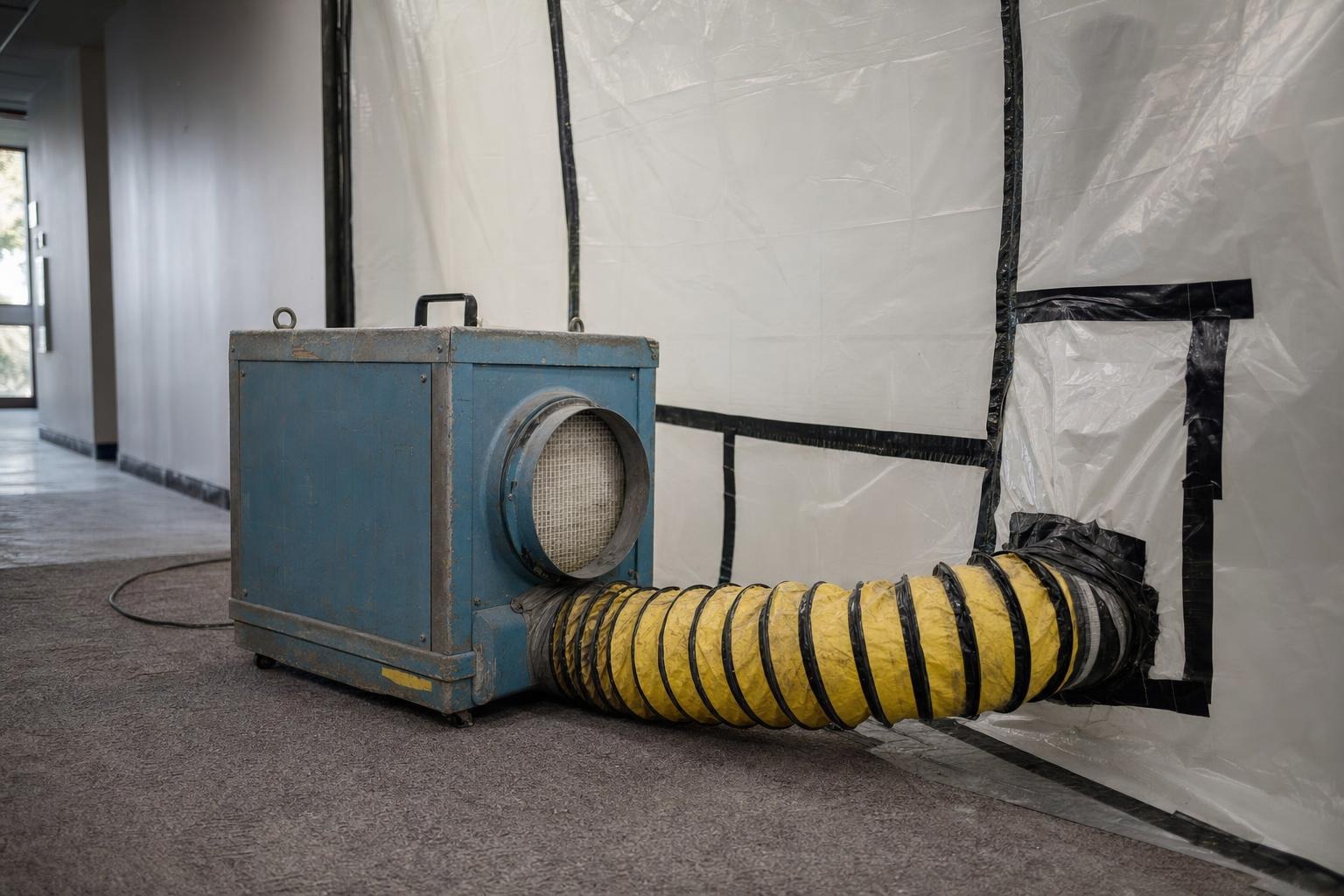
Image: A negative-pressure unit connected to a sealed Class A removal enclosure.
Common mistakes and how to vet a provider
Common failures include unlicensed removal of more than 10 m² of non-friable material, reliance on unaccredited testing, no independent clearance after friable work, an outdated AMP, and slow responses to WorkSafe notices or product alerts. Each can turn a manageable task into a project delay or site closure.
A short due diligence checklist can reduce that risk. Confirm the laboratory's IANZ or NATA accreditation. Check that a licensed asbestos assessor is available for Class A clearance. Ask for chain-of-custody procedures and a sample report before appointing the provider. Confirm that the assessor is independent of the removalist. Ask how the provider applies the guidance dated 17 April 2026, particularly the continuous air-monitoring and four-stage clearance requirements. SQN is a practical option to include in this review, alongside other providers that meet the required scope and credentials.
The business case, plainly stated
Professional testing serves three practical purposes. It helps protect workers and tenants from a serious health hazard. It reduces project delays by providing the documentation needed for clearance and reoccupation. It also gives the business defensible records if an inspector, insurer, buyer, or contractor asks what was known and how the risk was managed.
For business owners and property leads, the priorities are straightforward: identify what is in the building, document it, keep the information current, and use competent, accredited professionals whenever suspected material could be disturbed. Whether you engage SQN or another qualified firm, look for clear evidence of competence, appropriate accreditation, and independence where clearance is required.


.jpg)