Why Specialist Beauty Businesses Are Building Around One Core Treatment
The aesthetics sector has spent years expanding treatment menus. Clinics that began with one or two services added facials, injectables, lasers, body contouring, hair restoration, wellness programmes and retail skincare. The logic was straightforward: more services should create more opportunities to sell.
A different model is now appearing. Some beauty and wellness businesses are choosing to specialise around one treatment category, one technology or one client problem. Instead of trying to be everything to everyone, they are building a clearer proposition, deeper operational knowledge and a more focused customer journey.
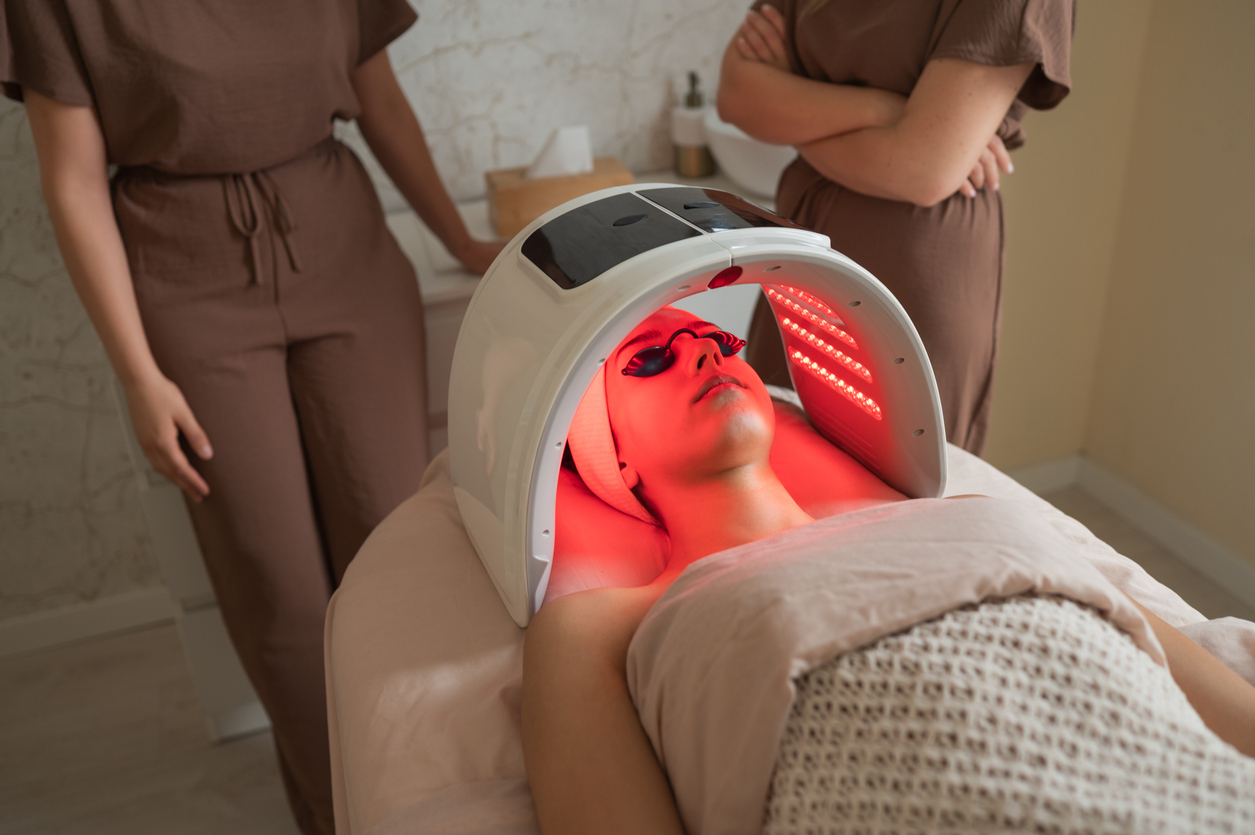
Professional LED phototherapy is well suited to that specialist model. It is repeatable, course-based, non-invasive and relevant to several common skin goals. But the commercial opportunity is not simply “buy a machine and sell sessions”. A specialist business succeeds only when it turns technology into a trustworthy service.
Why broad menus can weaken a small clinic
A long treatment list looks impressive, but it creates operational complexity. Each service requires training, consultation forms, contraindication screening, maintenance, consumables, pricing, marketing and aftercare. Staff knowledge becomes harder to standardise, and the website can struggle to communicate what the business is actually known for.
For a large clinic with several practitioners, this breadth may be manageable. For a small owner-led business, it can dilute attention. Marketing budgets are split across many keywords, equipment sits unused and clients receive inconsistent explanations depending on who is working.
Specialisation reduces that noise. A clinic focused on LED can build detailed protocols, clearer educational content and a more predictable appointment flow. It can also become memorable. Consumers are more likely to remember “the specialist LED clinic near Marylebone” than another general beauty provider offering 40 treatments.
A focused proposition is easier to understand
The specialist model answers three questions quickly: what do you do, who is it for and why should a client choose you?
For an LED business, the proposition might be professional blue, red and near-infrared phototherapy for clients seeking non-invasive support for skin rejuvenation, inflammatory blemishes and recovery. The differentiators could include a recognised professional device, practitioner-led protocols, Central London accessibility and course monitoring.
The website of LEDLightTherapy.uk illustrates this approach. The homepage leads with LED treatment rather than hiding it inside a general facial menu. It names the Dermalux Tri-Wave MD device, explains the three principal wavelengths, publishes session and course prices, shows the Marylebone location and links directly to booking.
That clarity supports both conversion and operations. Clients arrive with a more accurate expectation, while the practitioner spends less time correcting assumptions created by vague advertising.
Specialisation does not mean one standard treatment
A specialist clinic can still serve several client goals. The important distinction is that those services share a common technology and knowledge base.
Blue light at around 415nm may be used within acne-focused protocols. Red light around 633nm is commonly used for skin rejuvenation and recovery support. Near-infrared light around 830nm is used for deeper photobiomodulation applications. A professional device may deliver wavelengths separately or in selected combinations.
This creates a coherent service family: acne-focused LED, red-light rejuvenation, post-procedure support and maintenance plans all use the same core platform. Staff training, room setup and appointment timing remain relatively consistent even when the client objective changes.
However, the business must avoid stretching one technology into implausible promises. Specialisation is credible only when the clinic is clear about limitations and refers clients elsewhere when LED is not appropriate.
The economics of repeatable appointments
Course-based services can create predictable revenue, but they need to be structured responsibly. A 20-minute LED session has a defined room time and relatively low consumable use. Packages encourage consistency and can improve cash flow. Maintenance plans may support retention after an initial course.
The risk is turning packages into pressure selling. If a client is encouraged to buy 12 sessions before suitability is established, the short-term cash gain can damage trust and increase refund or complaint risk. A better model is consultation, an appropriate starting option, a scheduled review and transparent package terms.
Published pricing also matters. Hidden prices create friction and attract enquiries from people who may never book. LED Light Therapy UK currently lists a single session at £75, three sessions at £199, six at £349 and 12 at £659. Clear pricing allows consumers to evaluate affordability before contacting the clinic.
The business should calculate more than treatment-room margin. It must include device finance or purchase cost, servicing, insurance, practitioner time, rent, booking software, payment fees, cleaning, marketing and no-shows. A low-consumable treatment is not automatically highly profitable if utilisation is poor.
Technology is only one part of the moat
Buying a professional device does not create a defensible business on its own. Competitors can buy equipment too. The stronger moat is the system built around it: practitioner expertise, local reputation, client results, educational content, consistent service and ease of booking.
A specialist clinic can produce deeper content than a generalist. It can answer questions about wavelengths, treatment timing, home masks, photosensitivity, acne lesion types, course expectations and aftercare. That content improves search visibility while reducing uncertainty for clients.
The business can also create better internal data. Standardised photographs, protocol records and review notes help the practitioner understand which clients complete courses, which goals produce the strongest satisfaction and where expectations need to be adjusted.
Over time, that operating knowledge is more valuable than the device brochure.
The role of trust in a non-invasive service
LED appears low-risk because there are no needles and usually no downtime. That can tempt businesses to simplify screening or allow poorly trained staff to treat from a preset. The specialist model should move in the opposite direction.
Clients need to be asked about medication, light sensitivity, pregnancy, medical conditions and recent procedures. Aesthetic providers should know when to seek medical guidance and when a changing lesion, severe acne or unexplained rash should be referred rather than treated.
Claims should be precise. “Supports visible radiance and recovery” is more defensible than “repairs all skin damage”. “May help inflammatory blemishes” is more responsible than “cures acne”. The language may be less dramatic, but it reduces regulatory and reputational risk.
Trust is also created through simple operational details: clean rooms, punctual appointments, genuine before-and-after images, clear cancellation terms and a practitioner who can explain why a setting was selected.
Local search and the specialist advantage
A specialist website can target search intent more effectively than a broad clinic homepage. Pages can be built around “LED light therapy London”, “red light therapy London”, “LED therapy for acne”, “Dermalux treatment” and local areas such as Marylebone or Baker Street.
This does not mean creating dozens of thin pages with the same text and a different place name. Each page needs a distinct purpose, useful local information and internal links that guide visitors towards the main booking pages.
The homepage should remain the principal authority page for broad commercial intent. Secondary money pages can focus on red light, acne or the professional device. Educational guides should support those commercial pages rather than compete with them.
External coverage can help brand discovery, but paid placements intended to influence search rankings carry policy risk. Google advises that paid links should be qualified with `rel="sponsored"` or `nofollow`. A sustainable PR strategy should therefore value referral traffic, credibility and brand search as well as link equity.
A specialist brand needs a specialist client journey
The journey begins with the search result. The page title and description should clearly state the treatment and location. The landing page should show the device, price, session duration, practitioner, address and booking route without forcing the visitor to hunt.
The enquiry process should ask enough to route the client correctly but not feel like a medical interrogation by text message. A phone or in-person consultation can handle detail. The confirmation should explain preparation, arrival time and what to disclose.
At the clinic, the experience should be repeatable. Consultation notes, photographs, selected wavelength and session details should be recorded. Aftercare should be concise and relevant. The next appointment should be discussed in the context of the plan, not automatically sold.
After the course, the clinic should request feedback and review photographs. Clients who achieved their goal may move to maintenance; those who did not should receive an honest reassessment.
Founder-led expertise as a commercial asset
Small specialist clinics often depend heavily on one practitioner. That concentration is both an advantage and a risk.
The advantage is consistency. Clients know who will treat them, and the founder’s knowledge becomes part of the brand. Educational content can reflect real consultation questions, and service changes can be implemented quickly.
The risk is capacity. Revenue is limited by the practitioner’s time, illness can disrupt the schedule and quality may fall if expansion happens too quickly. The business should document protocols early, even before hiring. Training, cleaning, photography, consultation and escalation procedures should not live only in the founder’s memory.
A specialist model can later support a second practitioner more easily because the training scope is narrower. However, the new staff member must be able to reproduce the judgement and communication, not merely operate the panel.
Retention without dependency marketing
Course-based treatments naturally create repeat visits. The ethical challenge is to build retention through value rather than fear.
Clients should not be told that their skin will rapidly deteriorate if they stop. Maintenance should be offered as an option based on goals, response and preference. Some people will continue monthly; others will return before events or during periods of breakouts. A flexible model can retain the relationship without manufacturing anxiety.
Useful follow-up may include a progress summary, reminder of the home routine and guidance on when to seek medical advice. Automated messages can support attendance, but communication should not become relentless.
The strongest retention driver is a client who understands the treatment, sees a worthwhile result and trusts the practitioner’s restraint.
Content as an extension of the consultation
A specialist clinic can turn recurring questions into durable marketing assets. Articles comparing professional panels with home masks, explaining red versus near-infrared light or outlining what happens during a first appointment help consumers before they make contact.
This type of content should be reviewed for accuracy and dated. Medical-sounding claims need primary sources, and the site should distinguish educational information from personalised advice. Pages should also be edited when prices, hours or protocols change.
The commercial value is significant. Better-informed visitors are more likely to book the correct service, and staff spend less time repeating basic explanations. High-quality content can also attract journalists, bloggers and partners looking for an informed source.
What generalist clinics can learn
The lesson is not that every aesthetic business should abandon its menu and buy an LED device. The lesson is that clarity creates value.
A generalist clinic can still identify a lead treatment, build deeper expertise around it and organise the website so the strongest commercial pages receive authority. It can reduce underused services, standardise consultation and publish prices. It can stop describing every technology as revolutionary.
Specialisation is a strategic choice, not a branding trick. It works when operations, knowledge, marketing and client experience align around the same promise.
The limits of the model
A single-treatment business is exposed if consumer interest falls, regulation changes, the device requires extended repair or a stronger technology replaces it. Demand may also fluctuate seasonally.
Risk can be managed without diluting the proposition. The clinic can offer related LED protocols, maintenance plans and appropriate combinations with external partner services. It can build an email list, local partnerships and strong organic content. It should maintain insurance, service contracts and financial reserves.
Most importantly, the business should avoid making its identity dependent on one manufacturer claim. The brand should stand for specialist assessment and responsible phototherapy, not only a particular machine.
A focused business can feel bigger than it is
Consumers often associate expertise with depth. A small clinic that explains one treatment exceptionally well can appear more authoritative than a larger provider with a confusing menu. That perception must be supported by real standards, but it gives specialist businesses a route to compete without matching the advertising budget of national chains.
The commercial case for an LED-focused model is therefore broader than the popularity of red light. It combines a recognisable consumer trend with repeatable operations, course revenue, low downtime and rich educational potential.
The businesses that succeed will not be those that simply place a glowing panel in a treatment room. They will be those that build a complete specialist system around it: clear positioning, rigorous screening, evidence-aware claims, transparent pricing, disciplined follow-up and the confidence to say when the treatment is not the right choice.