Why the First Business to Answer the Phone Wins the Job
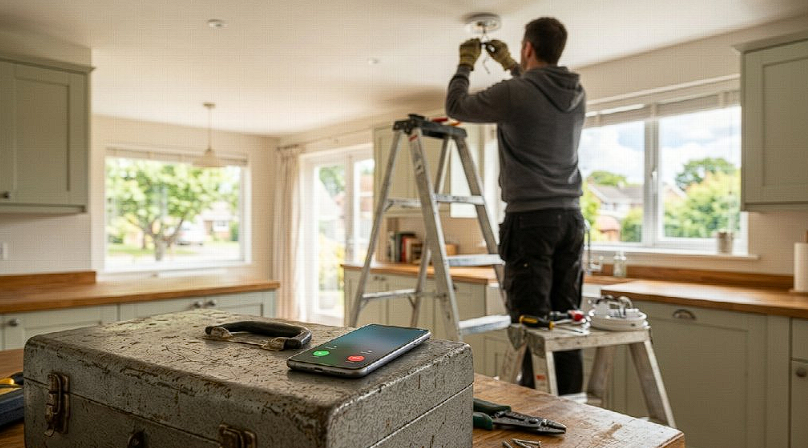
A homeowner has a problem. A leaking pipe, a broken garage door, a tree leaning over the fence. They search online, pick a business that looks right and call.
Nobody answers. The owner is on a ladder, under a sink or driving between jobs. So the homeowner does what almost everyone does. They hang up and call the next business on the list.
For a small service business, this is one of the biggest hidden costs there is. It doesn't show up on any invoice. But it decides who gets the job long before anyone writes a quote.
What happens when nobody picks up
Most customers don't leave a voicemail and wait. They keep calling until someone answers. When someone does, that business books the visit.
Meanwhile, the first business sees the missed call and phones back. Even ten minutes later is too slow. By then the customer has already spoken to two or three others, and all of them are trying to book a visit. Instead of being the only option, you're now one quote among several, and the conversation turns to price.
The work you do is no different. The customer simply heard someone else's voice first.
Why most owners don't see it
Ask a busy owner how many calls they answer and most will say "nearly all of them". It feels true, because you remember the calls you take. You don't remember the ones that rang out while your hands were full.
It's worth checking. Open your phone's call log for the last two weeks and count the missed calls from numbers you don't know. Then count how many of those you called back within a few minutes. For most one-person and small-crew businesses, the answer is an eye-opener.
And a missed call is rarely just one missed job. A customer who's happy with your work comes back next year, and the year after. They recommend you to a neighbour, a friend or someone at work, and some of those people become regulars too. So the call that rang out wasn't only about this week's job. It may have been the start of years of repeat work and referrals that now go to someone else.
The good news is that you don't need to hire a receptionist to fix it. Three simple tools cover most of the gap.
Fix 1: Missed-call text-back
This is the easiest place to start. When a call goes unanswered, the system sends the caller a text right away. Something like: "Sorry I missed you, I'm on a job. What do you need help with? I'll call you back shortly."
It works because it answers the question every caller has: did anyone get my message? A quick, friendly text tells them a real business is on the other end. Many people reply to the text instead of calling the next number, which buys you time to finish what you're doing.
Most business phone systems and call apps offer this. Keep the message short, use your business name and sound like a person. A good text covers three things: who you are, when you'll call back, and a quick question about what they need. That way you have the details before you pick up the phone, and the customer knows exactly when to expect you.
Fix 2: An AI receptionist that answers when you can't
A missed-call text helps, but the customer still has to wait. An AI receptionist goes a step further. It picks up the call when you can't, talks to the customer, takes their details and what they need, and can book them in or pass the details straight to you.
Here's the honest version. An AI receptionist will never be as good as a human receptionist. It won't know your regular customers by name, and it won't handle every odd question perfectly. But it is far better than a missed call. A customer who gets a helpful answer is much less likely to keep dialling.
The ones that work best are built for a single trade, because they already know the questions customers ask and the details you need. Specialists such as Click Me Tree Services build tailored AI receptionists for tree surgeons, and their figures show how big the gap can be. In that trade, only 1 in 3 calls is answered first time, and a customer calls about 3 businesses before someone picks up.
If you work in another trade, look for the same thing: an AI receptionist set up for the jobs you actually do, not a generic phone bot.
Fix 3: Fast follow-up on web enquiries
Calls aren't the only way customers reach you. Contact forms, website chat, messages through your business profile and social media all count, and the same rule applies. The first business to reply usually gets the conversation.
A web enquiry sent at 9pm and answered the next afternoon has often gone elsewhere by then. A few habits make a real difference:
- Send an instant confirmation. An automatic reply that thanks them and says when you'll be in touch.
- Get alerts on your phone. If enquiries only land in an inbox you check once a day, you'll always be late.
- Reply with a next step. Don't just say "thanks for reaching out". Ask one useful question or offer a time to visit.
- Keep everything in one place. Calls, texts and form messages in one list are much easier to follow up than three separate inboxes.
A quick checklist
Use this to see where you stand:
- I've counted my missed calls from unknown numbers over the last two weeks.
- Every missed call gets an automatic text within seconds.
- Something answers the phone when I can't, during work hours and after.
- Web enquiries get an instant confirmation.
- Enquiry alerts come straight to my phone.
- I know who follows up, and how fast, when I'm on a job.
If you can't tick off most of these, start with the missed-call text. It's the quickest to set up, and it starts working from the very next missed call.
The short version
Customers don't wait for the best business. They go with the first one that answers. You can't be on the phone and on the job at the same time, and you don't have to be. A missed-call text, an AI receptionist for when your hands are full and fast replies to web enquiries make sure the first voice a customer hears is yours.