Choosing an SMT Reflow Oven for Electronics Manufacturing
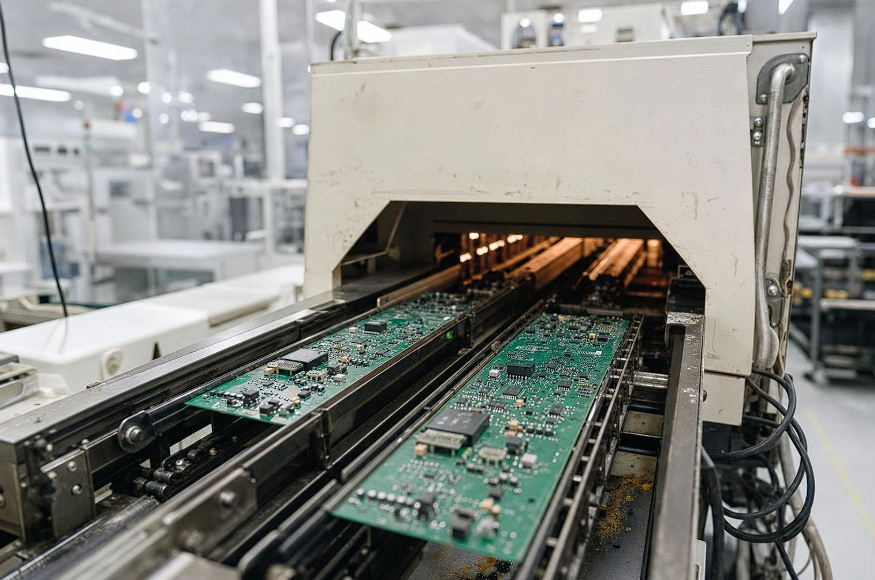
In an automated SMT line, the reflow oven is where solder joints become permanent. Placement programmes can be corrected and printers retuned, but a poor thermal profile can cause tombstoned parts, voids, damaged components, or intermittent joints that fail after the product reaches a customer. The oven sets your process window, limits practical throughput, and accounts for a significant share of the line's energy use.
It also affects conveyor width, lane count, nitrogen plumbing, extraction, and production data reporting. The main options are forced convection using air or nitrogen, convection with a vacuum stage, and vapour phase. If you are still planning the line, supplier catalogues can help you see how reflow, PCB handling, and inspection equipment are configured together. SZWIT, for example, supplies SMT and THT full-line equipment, including reflow ovens and integration support.
Key takeaways
- Specify the process first. Board size, mass, alloy, and component sensitivity determine the profile you need before you shortlist a machine.
- Zones provide control, not speed. More heating zones make it easier to maintain a lead-free profile across mixed-density boards.
- Reflow often sets the pace. Time at profile is fixed, so the oven can become the line's bottleneck.
- Compare running costs, not just capital cost. Power, nitrogen, flux management, and planned maintenance add up over the machine's working life.
Start with what you are soldering and how fast
Many disappointing oven purchases begin with a specification sheet rather than the product mix. Before speaking to suppliers, document what your boards require.
- Maximum board length, width, and assembly mass, including carriers and heatsinks.
- Solder paste and alloy, including the peak temperature and cooling rates in the datasheet.
- Component sensitivity, including moisture sensitivity level and package limits under J-STD-020.
- Required units per hour now and after the next expected production increase.
- Whether future products may require dual lanes, wider boards, or nitrogen.
Thermal capability and zone count
A convection oven divides the tunnel into preheat, soak, reflow, and cooling zones. More zones provide finer control over ramp rates, which matters when a board contains both fine-pitch components and large thermal masses. Fewer zones may be adequate for simple, uniform boards.
Two standards commonly appear on specification sheets. IPC-7530B covers temperature profiling guidance, while J-STD-020 sets component classification limits. Typical peak body temperatures for mass reflow are around 240 to 250°C, depending on the package category. Paste datasheets may narrow the usable range. For example, Kester's NP560 recommends a peak of 235 to 255°C and a cooling rate of 3 to 6°C per second. Indium's SAC305 guidance suggests a peak of 230 to 260°C and a cooling ramp of 2 to 6°C per second. Uniformity claims also vary. BTU states that its Aurora and Pyramax platforms provide thermal uniformity of under 4°C across panels up to 700 by 700 mm. Treat any supplier figure as a starting point and verify it with your own boards.
Conveyors, width, and line balance
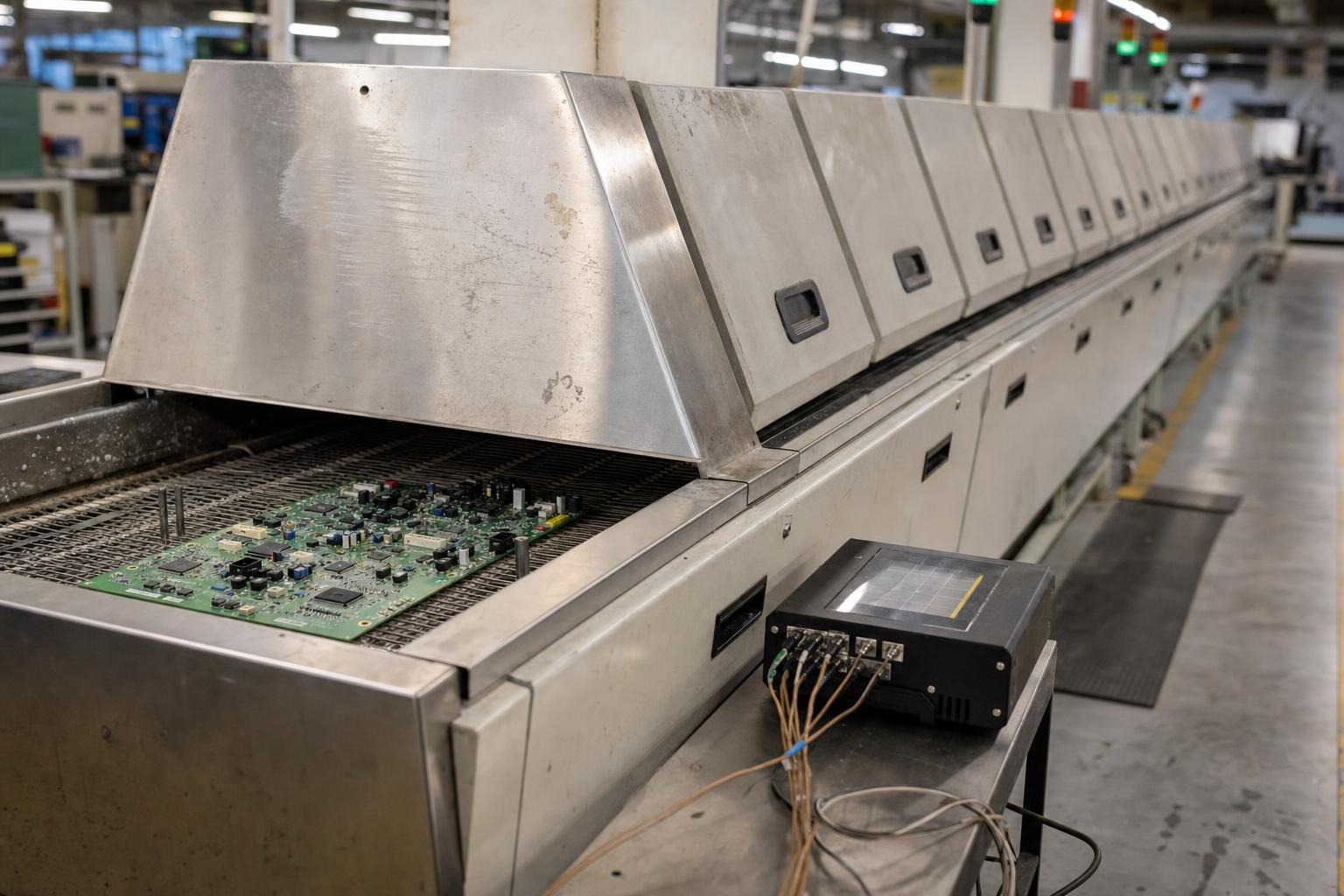
Mesh belts suit small, light boards and lower-cost production. Edge rails are usually preferable for assemblies with bottom-side components or panels that must not sag. Check the maximum board width, rail adjustment method, and availability of centre supports for long boards.
Line balance deserves careful attention. Reflow often limits throughput because the time at profile is fixed. Increasing belt speed changes the thermal result. Estimate oven capacity from conveyor speed and board pitch, then compare it with the placement rate. If the oven is the constraint, a longer tunnel or dual-lane configuration may be more economical than adding placement capacity that the line cannot use. For comparison, supplier directories for an SMT reflow oven can show example conveyor and handling configurations.
Air or nitrogen
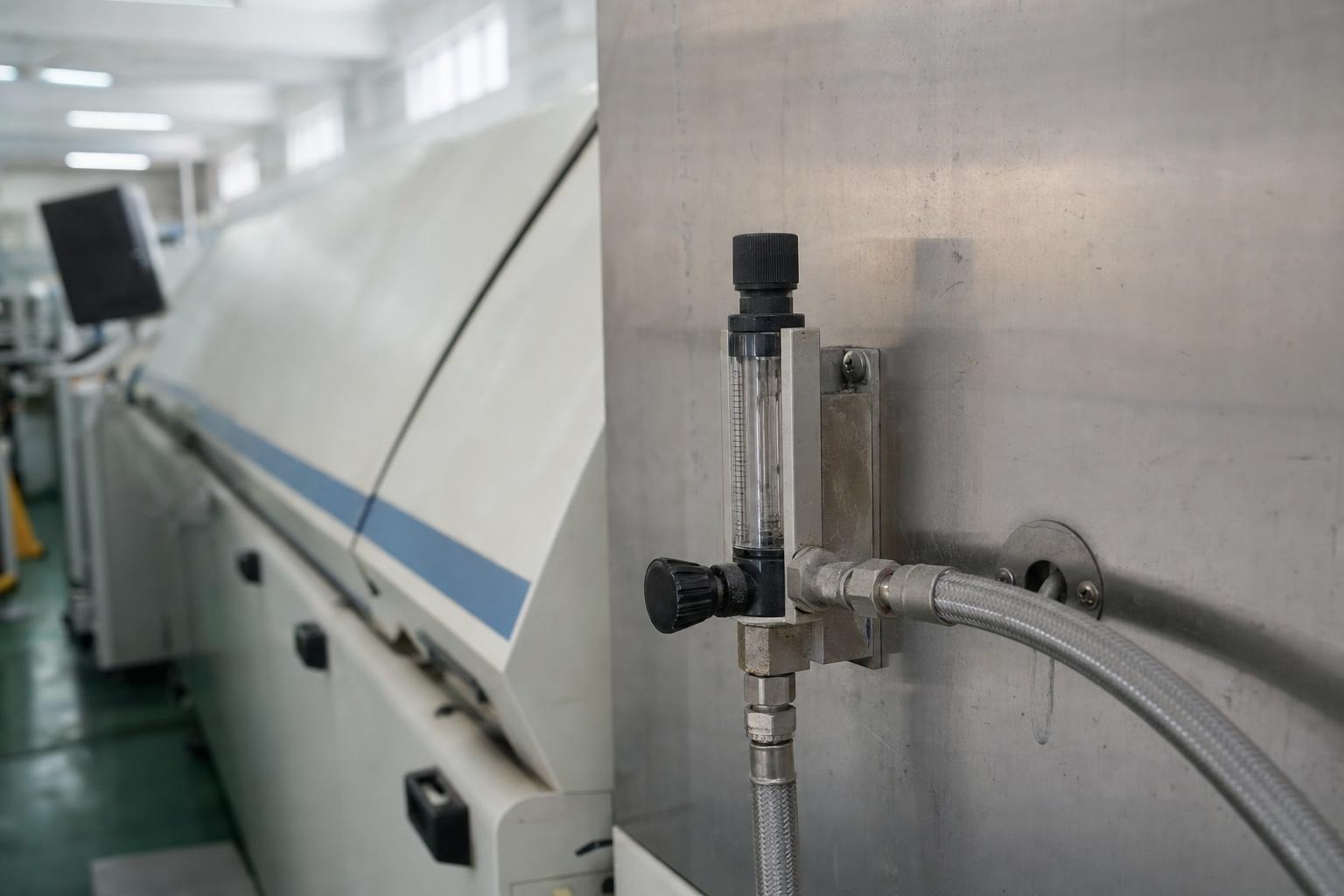
Nitrogen lowers the oxygen level in the tunnel, reducing oxidation and potentially improving wetting. It is often specified for fine solder powders, OSP finishes, and high-reliability work where process margin matters more than gas cost.
The trade-off is operational. Nitrogen requires a supply, plumbing, flow control, and an oxygen analyser, and consumption continues while the oven runs. Rehm highlights a mechatronic curtain on its VisionXP+ that it says can reduce nitrogen use by up to 20%. BTU lists an EnergyPilot feature designed to reduce power and nitrogen use on its Pyramax ovens. These are supplier claims for specific configurations, so request consumption measurements at your intended profile, oxygen target, and board loading.
Vacuum and vapour phase options
Voiding is a concern in power devices, bottom-terminated components, and large BGAs because trapped gas can reduce thermal and electrical performance. An inline vacuum module applies reduced pressure while the solder is molten, allowing voids to escape. Heller states that its vacuum reflow process can reduce solder voids to below 1% in power device packaging. It also publishes model-specific figures of 22 to 28 kW oven power and 150 to 400 standard litres per minute of nitrogen for a large inline system. Results depend on the assembly and process, so validate performance with X-ray inspection and account for the additional cycle time.
Vapour phase uses condensing vapour to heat the board. The medium's boiling point limits peak temperature, and heating can be highly uniform. IBL states that its process provides an oxygen-free atmosphere without additional nitrogen, while ASSCON claims that vapour phase can use substantially less power than convection in some applications. Treat both as supplier claims. Vapour phase also involves fluid consumption, fume handling, and cycle times that may suit dense or heavy assemblies better than high-volume production of simple boards.
Integration and production data
A modern oven should provide more than heat. Look for recipe control linked to product identity, barcode or traceability support, alarm and event logging, energy-saving standby modes, and open protocols for exchanging data with your manufacturing execution system. Ask which protocol versions are supported and whether integration work costs extra. Full-line suppliers such as SZWIT are often involved in this discussion early because oven communication and board handling must work with every machine in the line.
Compliance notes for Great Britain
This is a practical summary, not legal advice. Under the 2024 amendments, UK government guidance updated in July 2025 confirms that CE marking continues to be recognised for many product categories placed on the Great Britain market, either alongside or instead of UKCA marking. The applicable route still depends on the equipment and regulations involved. Keep each machine's declaration of conformity, labelling information, and technical documentation on record. Check current guidance for the relevant product category rather than relying on older transition dates.
Cost of ownership and a buyer's checklist
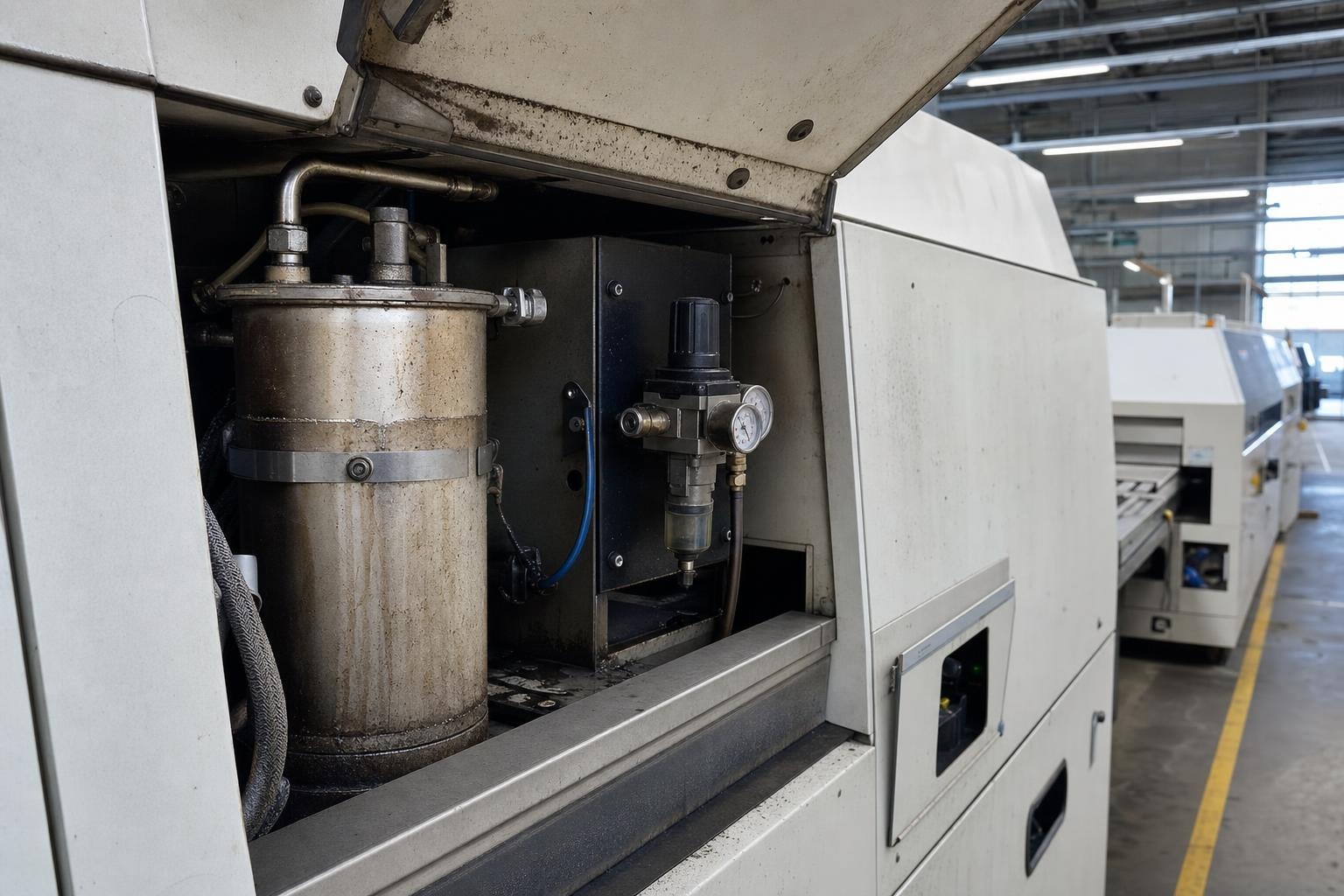
Capital cost is easy to compare but does not show the full cost of ownership. Ask each supplier for power draw at your intended profile, nitrogen flow at your oxygen target, the flux management method and service interval, planned maintenance downtime, cooling configuration, and tunnel access for cleaning. Use the same questions for every supplier so the answers are comparable.
- Peak temperature and ramp capability against the paste datasheet.
- Zone count and tunnel length in relation to board mass.
- Maximum board width and available lane options.
- Oxygen capability and nitrogen plumbing requirements.
- Vacuum module availability and whether the process needs one.
- Suitability of vapour phase for dense or heavy assemblies.
- Conveyor type, board support method, and edge clearance.
- Data protocols and manufacturing execution system compatibility.
- Profiler compatibility and available profiling support.
- Spare-parts availability, service response, and maintenance access.
Decide in the right order
Work from process requirements to throughput and line balance, then consider atmosphere, energy use, and integration. This order keeps the decision focused on what your boards require rather than what a specification sheet promotes. A full-line provider such as SZWIT should be able to explain how the oven will connect with printers, placement equipment, inspection systems, and board handling. Whatever route you choose, run a pilot using your assemblies, paste, and components, then profile and inspect the results before committing capital.