Dynamic vs Static Load: What a Hilux Roof Rack Can Actually Carry
Most people read one number off a roof rack spec sheet and assume that is what they can carry.
It usually is not, because a loaded roof is governed by at least three separate limits and only the smallest one counts.
This guide explains dynamic and static ratings, how the vehicle and the mounting system fit into the calculation, and what changes once a rooftop tent enters the picture. It is written for Hilux owners setting up a touring build.
Key Takeaways
- Dynamic rating is what the roof can carry while the vehicle is moving, and static rating is what it can hold parked.
- Static figures are typically much higher than dynamic, which is why rooftop tents work at all.
- Your real limit is the lowest of three numbers: the rack rating, the vehicle roof rating and the mounting system rating.
- The rack's own weight comes off your usable payload before you load a single item.
- Weight on the roof raises the centre of gravity and changes how the vehicle handles long before it hits any rated limit.
What the two ratings actually mean
The dynamic rating covers the vehicle in motion, and it is the lower of the two because driving adds forces the parked figure never sees.
Cornering, braking, corrugations, and a sudden dip all multiply the effective weight sitting on the mounts.
The static rating applies only when the vehicle is stationary and level. It is far higher because the load is simply pressing down, with nothing amplifying it.
The gap between them is large. A platform rack might carry 95kg on the move and 190kg parked, which is the kind of spread you will see across quality aluminium racks.
The number that actually governs
Three separate ratings apply to any roof load, and the lowest of them is your ceiling. There is the rack's own rating, the vehicle manufacturer's roof load limit, and the rating of whatever tracks or feet connect the two.
People routinely quote the highest of the three because it is the most flattering. That does not help if the vehicle's own roof limit sits below it, so check your owner's manual rather than assuming the rack figure applies.
Subtract the rack from that number as well. A 15kg platform is 15kg of your allowance gone before you have loaded anything, and heavier steel racks eat considerably more.
Rooftop tents and the static exception
A rooftop tent is the clearest case for why both ratings exist. The tent must fit inside the dynamic rating while you are driving, but once you are parked, the occupants are covered by the far larger static figure.
Run the numbers both ways before you buy. A tent that comfortably fits the static rating with two adults inside may still be too heavy for the dynamic rating once you add an awning, traction boards, and a jerry can holder.
Mounting is not an afterthought
The connection between rack and roof is where most cheap setups fail, and it is also where fitment gets vehicle-specific.
A universal rack bolted to generic feet transfers load into places the roof was never designed to take it.
Vehicle-specific systems solve this by spreading load along a proper track.
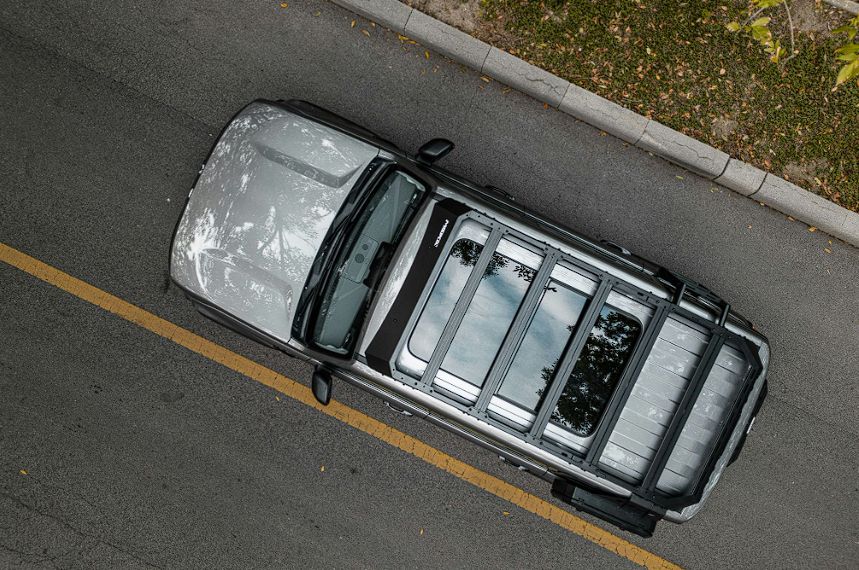
Offroad Animal roof racks for Hilux are built around the Rhino track system, part number RTS556, which is required for fitment rather than optional, and the Scout platform itself is designed for the Hilux rather than adapted to it.
Budget for the tracks separately when you are pricing a build. They are a genuine line item, not an accessory you can skip.
Wind noise is a design problem, not a fact of life
Roof rack noise comes from air tumbling over square edges and through gaps in the structure. It is the single most common complaint about aftermarket racks, and it is largely a function of profile and geometry.
Low-profile aluminium platforms with a wind deflector are substantially quieter than tall tubular racks. If you commute in the vehicle during the week, this matters more than any spec on the sheet.
Weight up high changes the vehicle
Roof load raises the centre of gravity, and that affects body roll, braking distance and rollover margin.
The effect is real well before you reach any rated limit, which is why experienced tourers keep heavy items low and use the roof for bulky light gear.
Think in terms of what belongs up there. Swags, awnings, traction boards and empty water tanks make sense, while tools, recovery gear and full jerry cans are better in the tub.
Loading and securing

T-slot rails let you position mounts anywhere along the platform, which matters more than it sounds.
Spreading load across the full length keeps it off a single crossbar and stops everything concentrating at one point.
Check your fasteners after the first hundred kilometres of corrugations and then periodically. Vibration works bolts loose, and a rack is only as secure as its least-checked fixing.
Awnings are worth mounting on quick-release brackets rather than bolting on permanently. Leaving one up there year-round costs you fuel and payload on every trip where you never unroll it.
Conclusion
Work out your ceiling before you shop rather than after. Find the vehicle's roof limit, compare it to the rack and mounting ratings, take the lowest, then subtract the weight of the rack itself.
What remains is your actual payload, and it is usually smaller than people expect. Build within it, and a roof setup will last the life of the vehicle; ignore it, and you will find the limit the expensive way.
Frequently Asked Questions
What is the difference between dynamic and static roof load?
Dynamic load is the maximum weight the roof can carry while the vehicle is moving, and static load applies only when parked. Static ratings are much higher because driving forces are not acting on the load.
Does the rack's own weight count towards the limit?
Yes. The rack is part of the load, so subtract its weight from the rating before working out how much gear you can carry.
Can I fit a rooftop tent to a Hilux roof rack?
Generally yes, provided the tent weight sits inside the dynamic rating and the occupied weight sits inside the static rating. Check both figures rather than just the one that fits.
Do I need roof tracks, or can I use a universal rack?
Vehicle-specific track systems spread load properly and are often mandatory for a given rack. Some platforms, including the Scout for the Hilux, require a specific track before they can be fitted at all.
Why is my roof rack so noisy?
Noise comes from airflow over square edges and open structure. Low-profile aluminium platforms with a wind deflector are much quieter than tall tubular designs.
Should I put heavy items on the roof?
No, keep heavy items low in the vehicle. The roof suits bulky lightweight gear, because weight up high raises the centre of gravity and affects handling well before any rated limit.
https://offroadanimal.com.au/roof-racks/toyota-hilux/ Offroad Animal roof racks for Hilux