Graphic Design Company Penji Innovates B2B Marketing With New Crime-Comedy Series
Business-to-business (B2B) marketing tactics often revolve around case studies, industry reports, email newsletters, and LinkedIn professional networking.
But Penji, an unlimited graphic design services company, is taking its marketing approach to the next level by producing a three-part crime-comedy series, offering a blend of creativity, humour, and good old entertainment.
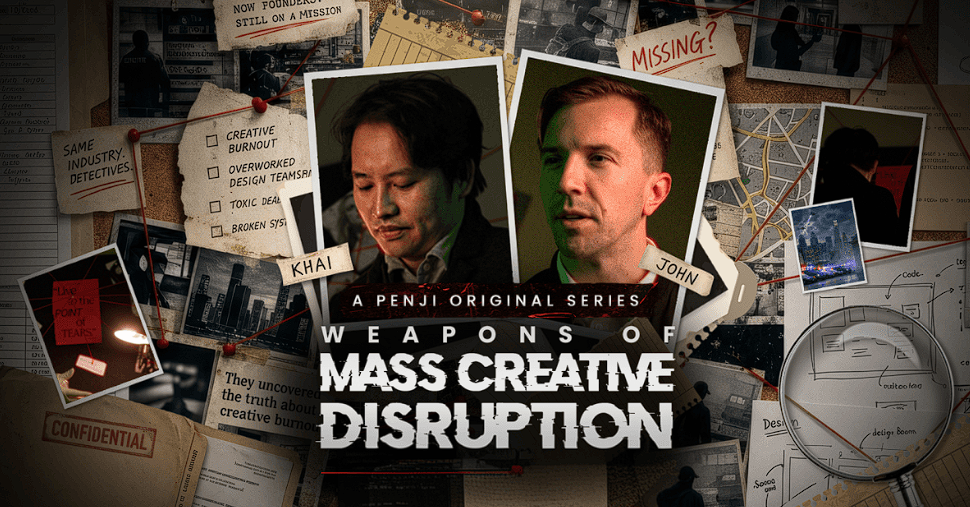
Penji’s innovative B2B marketing campaign, called Weapons of Mass Creative Disruption, aims to showcase the creativity of the team behind the subscription-based graphic design platform.
“We built Penji to democratize creativity, giving businesses and teams of all sizes access to their own world-class creative team. So, we decided to make a movie,” Khai Tran, Penji’s CEO and the director of Weapons of Mass Creative Disruption, said in a statement.
Tran described Penji’s innovative B2B campaign as a three-part cinematic thriller highlighting “some of Philadelphia's finest acting talent, brought to life by Penji's creative team.”
A Comedy Thriller Focused on Creative Workflows
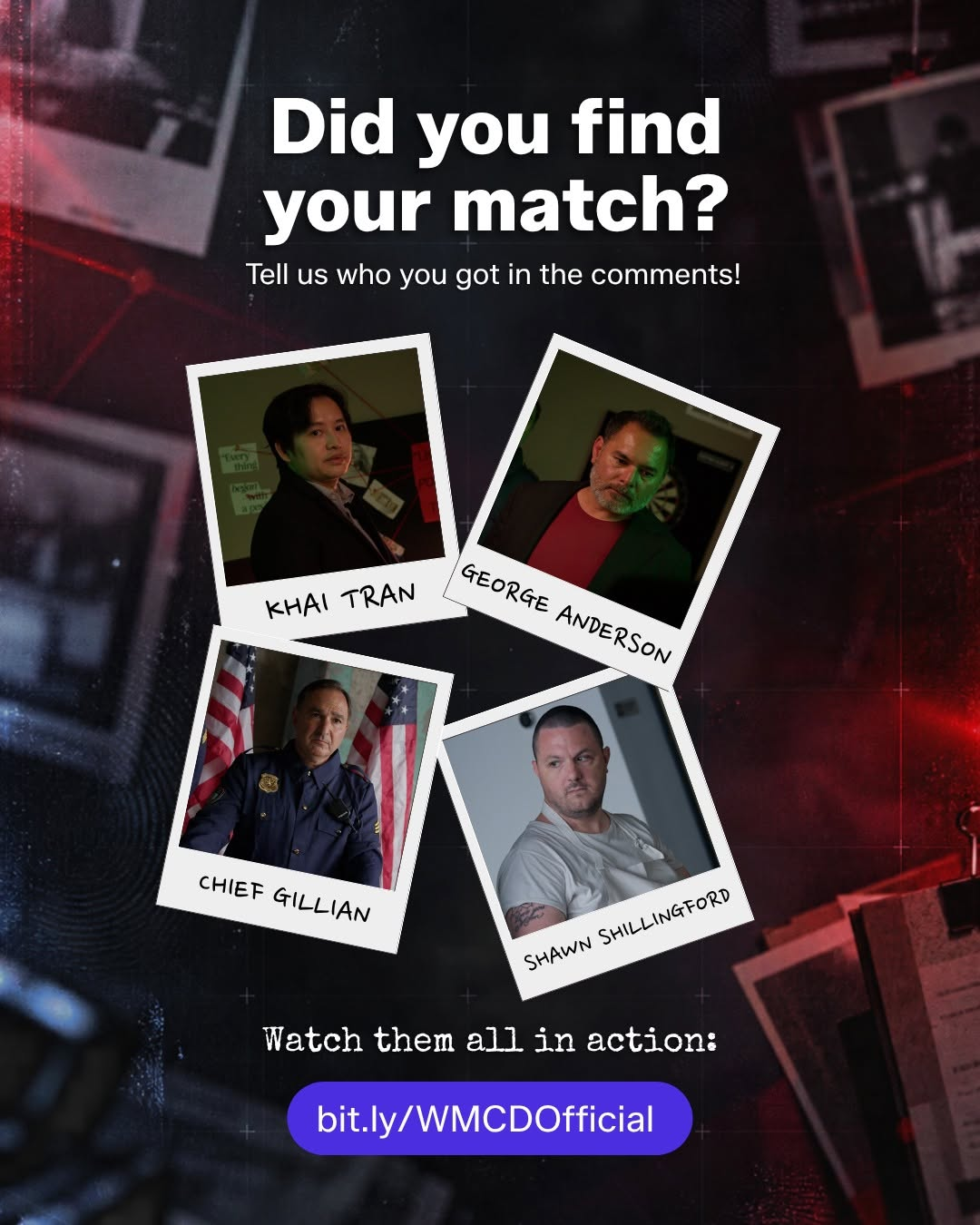
Penji dropped a trailer ahead of the release of its three-episode series. The trailer shows Khai Tran (yes, the same CEO and director) in what appears to be a crime scene, with gloved hands flipping over a folder.
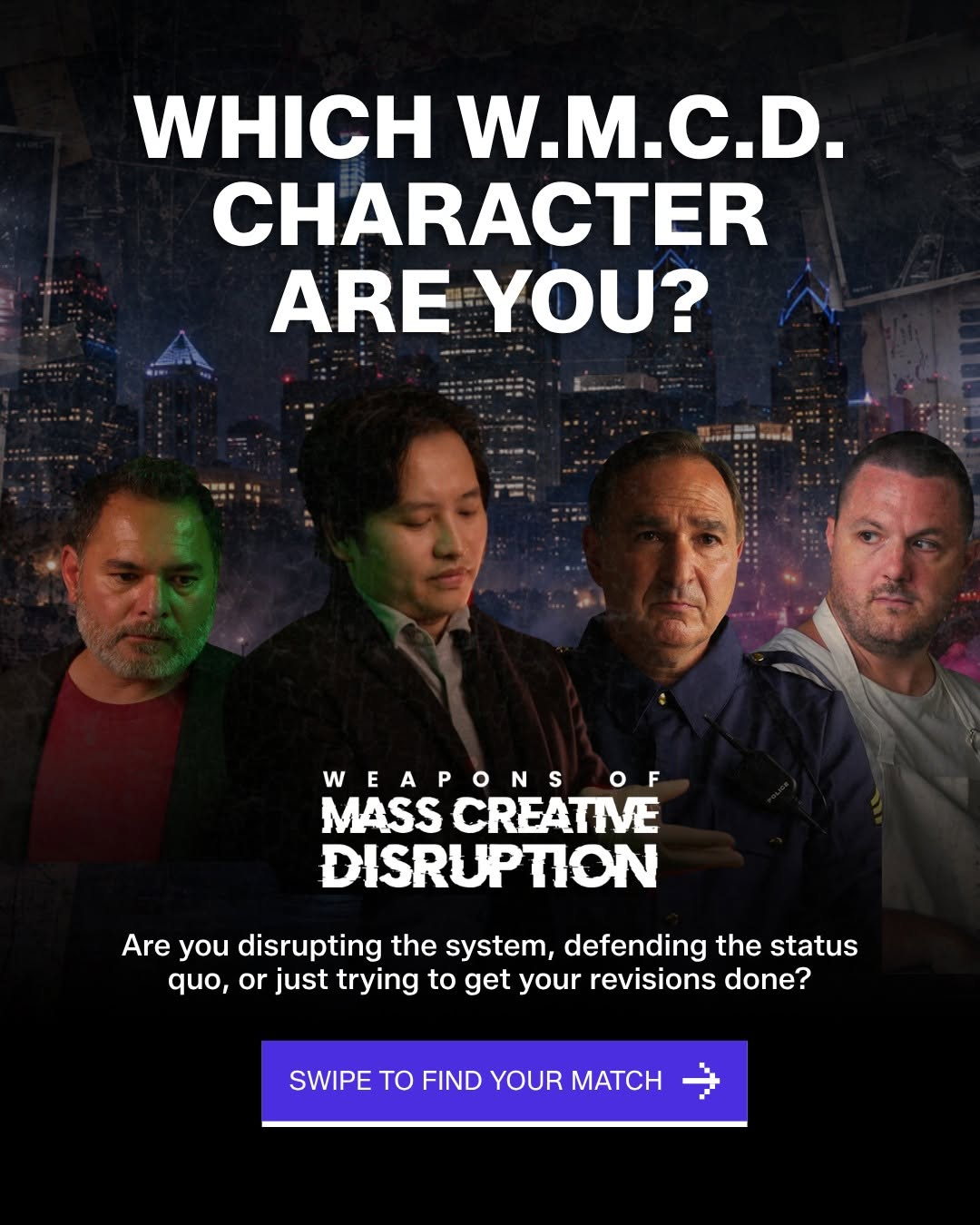
Also in the crime scene is George Anderson (played by Scot Teller), described as “an old-school agency owner obsessed with protecting his profit margins even when his entire creative team is falling apart.”
Tran asks Anderson, “How many creatives do you have in-house?”
“Just one. But they disappeared recently,” the agency owner answers while being observed by responding police officers.
Tran asks, “Then, who’s this?” He examines a mysterious fabric-covered mound in the dimly lit room. Officer Redfield (played by Robert Iezzi) comments that something doesn’t feel right.
“Can Joey do motion graphics? But you told the client ‘Yes’ anyway,” Tran tells Anderson, who broke down from the remark.
In another scene that looks like a press conference, Chief Jim Gillian (played by Richard Starapoli) speaks on a podium.
Characterised as a “powerful, compromised police chief determined to stop Penji before it destroys the old creative establishment.”
“Penji is also a weapon of mass creative disruption,” Gillian said on the mic.
The montage that comes next shows a news anchor, Diane Park (played by Judy Lee), interviewing Anderson about why he thinks Penji is a dangerous threat to the traditional creative production model.
It also shows two other key characters caught in the turmoil: Joshua Meyer, who plays himself, “an agency owner caught in the chaos as Penji threatens to turn the traditional creative industry upside down,” and a person identified as The Small Business Owner (played by Shawn Shillingford), described as an “everyday business owner who discovers that the greatest threat to the creative industry might be his biggest opportunity.”
The trailer climaxes with Gillian talking to someone on the phone with a threatening tone: “I will find you. I will keep retargeting you. And you will regret not signing up sooner.”
Toward the end of the trailer, Tran is seen with Penji co-founder Johnathan Grzybowski inspecting the crime scene. The last scene shows Journalist Park looking stunned and wide-eyed as she holds her phone to her ear, listening to the other person on the line.
Real Data Behind Creative Fiction
Despite being humourous and entertainingly action-filled, the trailer sheds light on real problems encountered by graphic design clients.
With 5.81 billion social media accounts worldwide as of October 2026, it’s no surprise that every brand, old and new, strives to maintain an active online presence, with powerful visual assets needed to stop the scroll.
Not to mention all the other visuals needed to establish a strong brand and build customer loyalty, including logos, brand guidelines, packaging design, print design, web and app design, and many others.
The demand for graphic design has never been more crucial, and the numbers in the creative industry tell the story. In the UK alone, the advertising agency revenue has increased at a compound annual rate of 5.6% to £46.3 billion over the five years through 2026.
That said, however, it’s ironic that creative agencies themselves struggle to communicate their value to their clients.
In an article for The Drum, consultant Aaron Hutchinson of The Hutch Consultancy analysed 1,600 agencies in the UK and found that 56% don’t clearly state what they do. Meanwhile, 78% don’t define who they do it for, and 47% don’t articulate the problem they solve. Now, these numbers say a lot about an industry that sells clarity for a living.
Despite their vague B2B messaging, there’s one thing agencies are clear about: their fees, which could be hefty. For instance, industry estimates peg graphic design agency logo design at around £1,500 to more than £5,000. Full brand identity, meanwhile, costs a lot more at around £10,000 to over £30,000.
With these numbers in mind, it’s not surprising that most creative agency clients are enterprises or large corporations that could afford huge marketing budgets. But does that mean professional-looking graphics should be exclusive to clients with deep pockets?
That’s exactly what unlimited graphic design service subscription providers like Penji aim to address. Offering on-demand graphic design at a predictable rate per month, this subscription-based model democratizes creative services. It offers startups and small businesses access to top creative talent in the world, without having to hire in-house or spending a small fortune on agency retainers.
These issues in the graphic design services industry are the same in the UK, the United States, and anywhere else in the world. And once you see the whole picture, you can appreciate the satirical genius of Weapons of Mass Creative Disruption in a whole new light.
In the Best In B2B 2025: Top Marketing Agencies In The UK report, True Founder Richard Parsons talked about the dual-brain funnel in B2B marketing.
He called the first part System 1 (Emotional), which he described as the domain of gut feelings, intuition, and brand perception.
“It’s fuelled by factors like brand awareness, thought leadership, and social proof. Buyers connect with brands they trust and admire, brands that resonate with their values and aspirations,” Parsons said.
The second part, System 2 (Rational), meanwhile, is analytical and is focused on logic and data. Think case studies, white papers, and product demos that offer information useful in purchase decisions.
Penji already covers System 2 (Rational) with its case studies and rich library of valuable content. As for System 1 (Emotional)? That’s where the Weapons of Mass Creative Disruption campaign comes in.
“By investing strategically, leveraging the dual-brain funnel, and maintaining consistent brand salience, you can gain a significant competitive advantage and drive sustainable growth,” Parsons remarked.
In the same report, Torpedo Group CEO Andrew Sinclair-Pearson said your brand is the best salesperson.
“Immediate recognition is key in today’s crowded B2B marketplace. An authentic, consistent, and professional brand presentation across all platforms can increase your company revenue,” he advised. “Buyers need to trust and understand a brand before making a purchase.”
Through its three-part crime series, Penji created tangible proof of its creative prowess, letting its work speak for itself.
The Bottom Line: Walk the Talk
Instead of telling potential clients about how good its creative services are, Penji showed them how it’s done through its Weapons of Mass Creative Disruption mini-series.
“Every shot was filmed for real. We used AI to enhance select shots, never to generate entire scenes. From creative direction and editing to animation, visual effects, and sound design, our team brought it all to life,” Tran shared about the production process for the series.
With today’s social media feeds filled with purely AI-generated reels, it’s refreshing to watch a short online series that highlights and celebrates human creativity.
“The trailers, marketing materials, and even the website? All created by Penji. This isn't just a movie. It's a showcase of what our creative team can do for you.”
This campaign reminds B2B marketers that, sometimes, audiences just enjoy getting caught up in a story and sharing a good laugh, without feeling like they’re deliberately being sold something. And most importantly, there’s immense value in simply showing rather than telling.
To watch the trailer for Penji’s innovative B2B marketing campaign, learn more about the characters, and view the episodes, head to Penji’s Weapons of Mass Creative Disruption page. You can also sign up for the VIP early screening through the same link.
About Penji
Penji is a Philadelphia-based unlimited graphic design subscription platform offering remote creative services to clients all around the globe. Providing unlimited graphic design at a predictable monthly rate, Penji is backed by the world’s top 1% designers and takes pride in being a human-led, AI-accelerated company.
Penji offers more than 120 creative projects, including branding design, print design, user interface and user experience, and motion graphics.