My Big Idea: nature restorer Habitat Aid
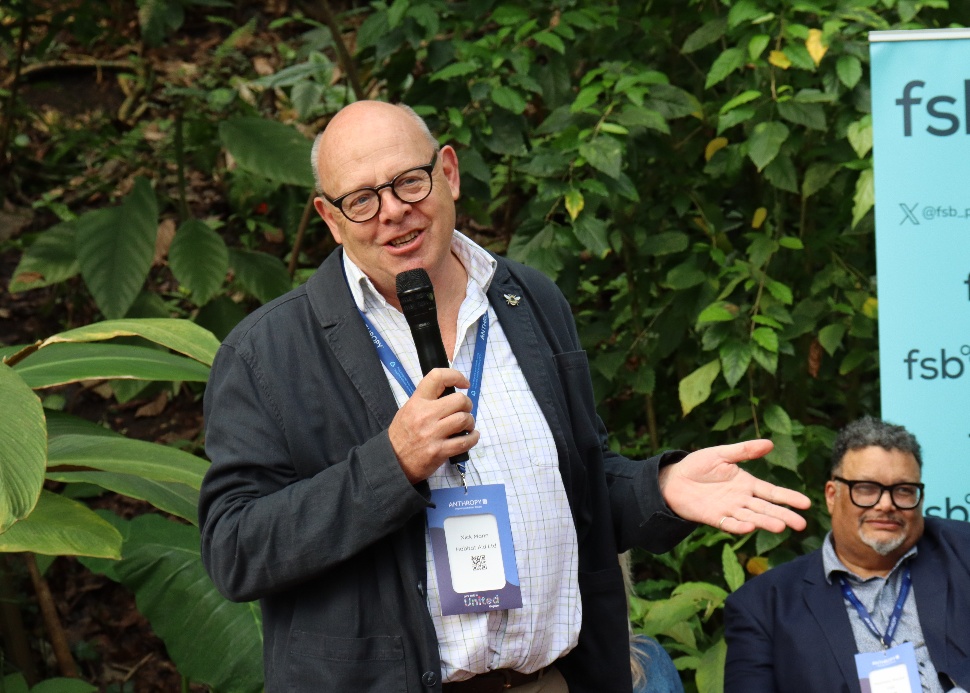
Hi Nick! What's your elevator pitch?
Habitat Aid is a Somerset-based B Corp nature restoration business helping people restore habitats across the UK. We supply British native trees, hedging, wildflower seed, pond plants and heritage fruit trees, working with specialist UK growers and harvesters. We actively promote them, and support UK conservation NGOs through our structured giving programme. Alongside that, we provide practical advice and consultancy to help people create wildlife-rich landscapes. It’s a one-stop shop for people.
Why does the market need it?
When I moved back to rural Somerset in adulthood, I was struck by how much wildlife had disappeared. I grew up with butterflies, moths, birds and wildflower-rich landscapes that felt abundant. Over time, those habitats have been lost and the wildlife that depends on them has declined with them.
A lot of the public conversation around conservation focuses on mammals and birds, but nature recovery starts much lower down the food chain. If you want more megafauana, you need healthy populations of insects. If you want more insects, you need a flourishing native flora. We want to get this message across and give people access to the right plants and seeds.
These are often supplied by small scale growers and harvesters, who might otherwise find it difficult to market. It’s important these organisations are promoted.
We also find there’s a need for someone to sit between theoretical specifications and what is possible in the field, without compromising customers’ original plans any more than is necessary. Our mantra is getting things done.
Where is the business today?
We've been operating since 2008 and have grown steadily into an award-winning B Corp business. Since 2020 we’ve supplied seeds and plants to over 30,000 customers around the country. Their projects range from private gardens and community schemes to large-scale habitat creation on private estates and solar farms. We’ve worked with top end garden designers and luxury brands and supplied initiatives like Earthwatch's Tiny Forest programme and Friends of the Earth’s Bee Cause.
Along the way we've donated more than £160,000 to UK conservation charities and NGOs, including organisations like Butterfly Conservation, the Bumblebee Conservation Trust and Somerset Wildlife Trust. Today, we're increasingly involved in consultancy alongside our retail driven work.
What made you think there was money in this?
Making money wasn't really the starting point - it was just something I felt strongly about. I spent 20 years in finance before Habitat Aid and I had made relatively easily good money working in Banks and in my own business. If I’m being brutally honest, I guess that made me rather naive. We downsized dramatically and that funded the first few years of the business. We make a reasonable living now, but I’m earning a lot less than I was 30 odd years ago, even in nominal terms. The money isn’t what gets me out of bed in the mornings.
What's your biggest strength?
As a business, we're able to bridge the gap between ecology and practical delivery. Conservation can sometimes feel inaccessible or overly technical. We help people understand what’s needed and then help them implement it, whether they're creating a small pond in a garden or restoring hundreds of acres of habitat.
My own strength? Integrity, I hope. I hate it when mistakes happen.
What is the secret to making the business work?
Environmental businesses need to operate efficiently and profitably if they're going to have long-term impact. One of the biggest challenges has been maintaining high environmental standards while remaining commercially viable in a market that often rewards cutting corners.
We've addressed that by being selective about suppliers, keeping close relationships with partners and making sure we communicate the value of quality, provenance and expertise.
How do you market the company?
Education is really important. We spend a lot of time explaining why biodiversity matters, how habitats work and what people can do to restore nature. That means lots of How To videos etc.. If you genuinely help people understand a problem and provide practical solutions, they tend to trust you.
We work hard making sure our websites are optimised. AI seems to like us, thanks goodness. I’m trying to get out more and talk to people too; I like being on panels and speaking at events. Our consulting work seems to be driven by word of mouth as much as anything.
What funding do you have? Is it enough?
I wanted to build Habitat Aid as an independent business. We had some modest startup capital from a couple of friends, but we haven’t needed anything since. The business isn't exposed to too much seasonality, and we’re blessed with strong cashflow. Our model has low overheads and a flexible cost structure too.
Tell us about the business model
We supply native plants, trees and seed sourced from trusted UK producers while also offering advice and consultancy on habitat creation and restoration projects. We work with a broad mix of customers, from individual gardeners through to commercial developers and renewable energy projects.
Our model benefits from working with specialist growers and suppliers across the UK rather than maintaining large-scale growing operations ourselves. That allows us to offer a wide range of products while keeping overheads low and with a focus on expertise, quality and provenance. We also have a charitable giving programme, donating over 2% of sales to conservation causes.
The downsides? We distribute profits so have no retained earnings. In a bad year that can get hairy! Even if we had the money, scaling ourselves up would be difficult as so much of what we do is built around individual projects or my own experience. We’re hoping AI might help us do this.
What were you doing before?
I spent over two decades in financial services, specialising in Japanese equities. The first half of that time was spent working for investment banks in London, Zurich and Tokyo. I then set up a boutique hedge fund with a couple of friends, which we ran from 1998 to 2008.
It's not the most obvious route into nature conservation! It gave me self-confidence, though, and a sense of perspective.
What is the future vision?
Our goal is to help accelerate nature recovery across the UK by making habitat restoration more accessible and more effective. We want to continue supporting conservation NGOs and high-quality UK growers, expanding consultancy work and helping larger “re-naturing” projects deliver meaningful outcomes. Our messaging is now much more mainstream than it was when we started, but we still need to get out as much information about good practice as we can. We hope that people will feel increasingly engaged with nature and empowered to do something to arrest its decline here.