9 Best Gift Cards for Global and Distributed Teams
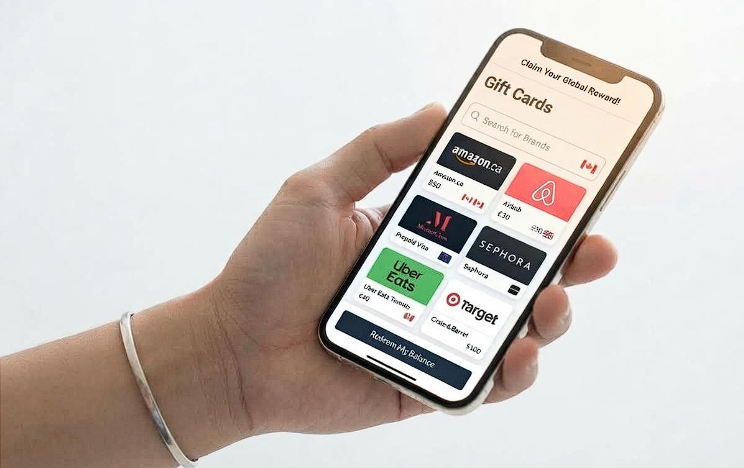
Your engineering lead is in Lisbon, your designer is in Manila, and your ops manager is in Toronto. You want to thank all three for the same launch, with the same value, on the same day. Then you discover that the card you picked can only be redeemed in one of those three countries. Choosing gift cards for global teams is less a question of generosity and more a question of redemption mechanics.
What actually breaks when you reward across borders
Most gift card problems are not about budget. They are about geography, currency, and timing.
A card bought in one market often cannot be redeemed in another, even when the brand is genuinely global. Retailers run separate national storefronts with separate balances. Streaming and delivery services lock credit to the account's country. Physical cards need a shipping address, which means customs forms and three-week delays for anyone outside your headquarters country.
Currency is the second trap. Send $50 to someone paid in Brazilian reais and they receive a number that has to be mentally converted, sometimes with a spread taken out along the way. When recognition requires arithmetic, it stops feeling like recognition.
Timing is the third. Gallup's research on recognition rituals in remote workplaces found that distributed employees are especially prone to feeling overlooked and that the fix is frequent, specific acknowledgement rather than one large annual gesture. A reward that lands three weeks after the moment it was meant to mark has already lost most of its effect.
So the criteria that matter are narrow and testable. How many countries does it reach? How fast does it arrive? Does the recipient see value in their own currency? And is there a minimum order that rules it out for a team of eleven?
1. Giftronaut's choice card
The structural problem with rewarding international employees is that you have to pick the brand before you know the recipient's country, catalogue, and currency. Choice cards invert that. You send a fixed value, and the person on the other end decides what it becomes.
Giftronaut reaches 225 countries and lets each recipient redeem against local brands in their own currency, with conversion handled automatically. Delivery is by email and arrives in seconds rather than days; denominations start at $5, and there are no platform fees, contracts, or subscriptions, so a company sending eleven cards pays the same terms as one sending eleven thousand. The catalogue runs past 1,200 brands, and finance teams can restrict it by country, category, or an explicit allow and block list.
The same flexibility can extend to distributed teams. For teams that already understand why custom corporate gifts outperform generic ones, Giftronaut's choice card applies the same logic to a distributed workforce: the personalisation happens at redemption, where the recipient knows their own market better than your HR team ever will. Recipients can be uploaded by spreadsheet, so a hundred-person send is a single upload rather than a hundred separate purchases.
2. Amazon gift cards
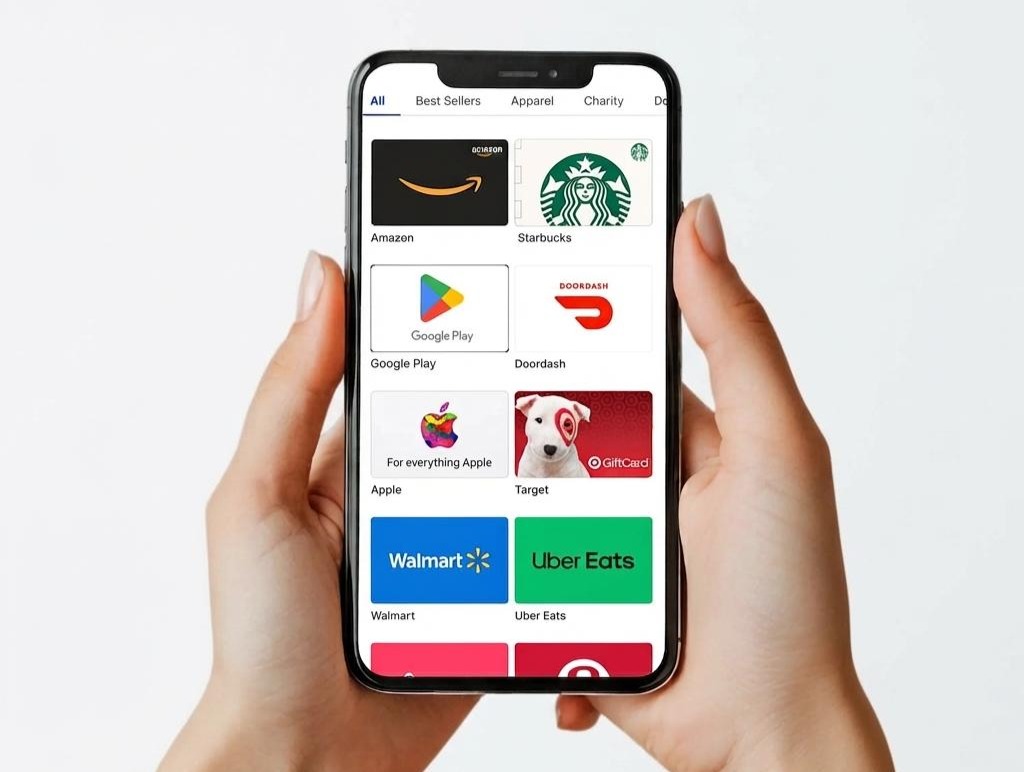
Amazon is the default suggestion for good reason. The catalogue is enormous, Amazon's gift card terms confirm balances do not expire, and almost everyone already has an account.
The limitation is one most buyers discover too late. Amazon operates separate national marketplaces with separate balances, so a card bought on the US site cannot be redeemed on the German, Japanese, or Indian site. There is no conversion path between them. Buying for a nine-country team means running nine separate purchases through nine storefronts.
There are volume rules to plan around, too. Amazon's business gift card policy restricts distribution through a Business Account to US incentive, loyalty and recognition programmes, and caps some card types at $10,000 per day. For a team concentrated in one Amazon market, it remains one of the strongest options available. For a genuinely distributed team, this is an administrative project.

3. Airbnb gift cards
Airbnb suits milestone recognition. It’s perfect for celebrating milestones like a work anniversary, a promotion, or the end of a long project. It reads as an experience rather than a purchase, and the funds do not expire, so nobody feels pressured to spend before a deadline. Companies that already budget for custom corporate gifts at those moments tend to find the same reasoning holds here, since a marked occasion justifies a larger and more memorable reward than a routine thank-you does.
Purchase geography is the constraint. According to Airbnb, digital Airbnb gift cards can be bought directly in 24 countries, including the US, UK, Canada, Australia, New Zealand and most of Western Europe, with other markets served only through third-party retailers. Corporate ordering carries a minimum purchase requirement, which rules it out for a single send to one person.
It is a strong card for occasional use but a poor choice for everyday gifting. Budget it for the two or three moments a year that genuinely warrant it.
4. Prepaid Visa or Mastercard
A prepaid card is the closest thing to handing someone cash without touching payroll. It can be used anywhere the network is accepted, both online and in person, making it the broadest single option after Giftronaut's choice card.
The catch is the fine print. Prepaid cards are issued per country, and a card issued in one market often cannot be loaded, activated, or used for cross-border transactions in another. Many carry activation fees, and some deduct monthly inactivity charges once the balance sits untouched for six months or more. That erosion is invisible to you and very visible to the recipient.
Use prepaid cards when your team clusters in one or two markets and you can source cards issued locally in each. Read the fee schedule before you commit, because it varies enormously between issuers.
5. Uber and Uber Eats credit
Uber credit works well for a specific job: covering a meal during a long release window, or thanking someone who stayed late on a deployment. It is immediate, it is practical, and it does not require the recipient to want anything in particular.
Credit is country-locked. A UK gift card cannot be applied to a US account, and coverage is patchy in markets where the service has limited or no presence. Denominations and availability differ by market, so build your list country by country rather than assuming parity.
Treat it as a tactical card for the markets where the service is strong, not as your programme's backbone.
6. Charity donation cards
A donation card lets the recipient direct a fixed amount to a non-profit of their choosing. It solves two problems at once: it removes the "what would they even want" guesswork, and it works in markets where the local retail gift card catalogue is thin.
It also suits recognition tied to company values, service milestones, or anything where a retail voucher would feel transactional. The trade-off is that some employees genuinely want something for themselves, and a donation card removes that option entirely. Coverage depends on the provider's charity list, which is usually broad in North America and Western Europe and much narrower elsewhere.
Offer it as one option among several rather than imposing it on a whole team.
7. MasterClass gift memberships
A gift membership works for teams where professional development is part of the culture. It streams in most countries, arrives by email, and lasts a year rather than being spent in an afternoon.
The trade-off is that it presumes something about the recipient. Someone who wants a week of groceries covered will not be thrilled by a year of video lessons, however well produced. It also comes at a single fixed value rather than a denomination you choose, which makes it awkward to match against a per-person budget.
Reserve it for people who have told you, directly or through their behaviour, that learning is what they want.
8. Target gift cards
Target cards are a strong domestic option. They have no expiry, no dormancy fees, and are available in both digital and physical formats, with a catalogue that spans groceries, household goods, electronics, and clothing. For a team based entirely in the United States, that combination is hard to beat.
Redemption is US-only, in stores and on the US site. That single constraint disqualifies it for any team with staff outside the country, no matter how good the card is otherwise.
If your workforce is US-based today but hiring internationally next year, plan the transition now rather than discovering the gap when your first overseas hire cannot use their welcome gift.
9. Local supermarket gift cards
The most useful reward in many markets is the least glamorous one. A supermarket card in the recipient's own city delivers more real value per unit than almost anything else, particularly where inflation has made weekly shopping a genuine pressure.
Nothing about it scales. Every market means a different retailer, a different purchasing process, a different denomination structure, and often a different finance approval. For a team spread across nine countries, that is nine separate procurement exercises repeated every time you run a recognition cycle.
Use local cards where you have a large enough cluster in one country to justify the setup, and something centralised everywhere else.
The tax rule that catches most teams out
The most common mistake is assuming a small gift card is too minor to report. In the United States it is not. The IRS is explicit that cash and cash-equivalent fringe benefits are never excludable as de minimis, and gift cards redeemable for general merchandise fall squarely into that category. There is no dollar threshold below which a card becomes exempt.
Guidance for employers reaches the same conclusion and recommends treating all gift cards and gift certificates as taxable wages, noting the narrow exception for certificates redeemable only for one specific low-value item.
Outside the US the picture changes again. Several jurisdictions operate small-gift or trivial-benefit exemptions with their own thresholds, conditions, and frequency limits, and they rarely align with each other. A single global gifting policy rarely survives contact with local payroll. Agree on the reporting treatment with finance in each market before the first send, rather than waiting until January when the payroll team asks what the December spend was for.
How to choose without piloting in every country
Start with your actual headcount map rather than a general principle. Count how many countries you need to reach and how many people sit in each. Plan for frequency at the same time, because the same budget split across several small moments usually lands better than a single annual payment, much as regular low-cost wellness gestures do more for a team than one expensive perk delivered once a year.
If eighty percent of your team is in one market, a strong domestic card plus a fallback for the rest is usually cheaper and simpler than a global platform. If your team is genuinely spread, the administrative cost of running separate purchases per country will exceed any per-card saving within a cycle or two.
Then test the three things that quietly determine whether a reward lands:
- Send one card to a colleague in your hardest market and watch them redeem it end-to-end. Time it.
- Check what the recipient sees on screen. If the value is displayed in a foreign currency, they are doing conversion maths before they feel appreciated.
- Confirm the minimum order and any dormancy fees in writing. Both change the effective cost per person.
Run that test once, and you will learn more than any comparison table can tell you, including this one.
Frequently asked questions
What is the best gift card for international employees?
A choice card allows the recipient to select their preferred brand and currency. Single-brand cards force you to guess what someone in another market wants and often cannot be redeemed outside the country of purchase. Choice cards move that decision to the person best placed to make it.
Do gift cards work in every country?
No. Most retail and service gift cards are locked to the country where they were issued, even when the brand operates globally. Amazon, Uber, and most supermarket cards all work this way. Only multi-country platforms and some prepaid network cards can be used across borders.
Are gift cards for employees taxable?
In the United States, yes. The IRS treats gift cards as cash equivalents, which are never excludable as de minimis fringe benefits, regardless of value. They should be included in wages and reported. Rules differ elsewhere, so confirm treatment with payroll in each market.
How fast do digital gift cards arrive?
Email delivery on a modern platform is effectively instant, arriving within seconds of the send. Physical cards take days domestically and often weeks internationally, with customs adding delay. For time-sensitive recognition, digital is the only realistic format.
What denomination should we send?
Match the moment rather than a global average. Small, frequent amounts starting around $10 to $25 work well for weekly or monthly recognition, while milestones justify $100 or more. Sending the same nominal figure everywhere ignores large differences in local purchasing power.
Can we send the same reward value to everyone?
You can, and many companies do, because it is simple. Be aware that a fixed dollar figure buys very different things in different markets. Some teams send the same nominal value to keep the gesture fair, while others adjust the amount based on local costs. Pick one approach and state it openly.
Do gift card balances expire?
It varies. Amazon and Airbnb balances do not expire. Many prepaid network cards charge monthly inactivity fees after a dormancy period, which erodes the balance without the recipient noticing. Always check the expiry and fee terms before you commit to a card at volume.
Is a prepaid Visa better than a retail gift card?
It is more flexible, since it can be used anywhere the network is accepted. It is also more likely to carry activation and dormancy fees, and the issuing country restricts cross-border use. Better for spending freedom, worse for predictable cost.
How do we handle recipients in countries with small retail catalogues?
Look for platforms that fall back to prepaid cards or charity donations where local brand coverage is thin. That way the recipient gets something usable even if the retail catalogue in their market is limited to a handful of names.
Can we stop employees redeeming rewards at certain brands?
On most business gifting platforms, yes. Brand controls let you build catalogues filtered by country or category or apply explicit allow and block lists. This feature matters for regulated industries and for companies that need to exclude alcohol, gambling, or competitor brands.
Rewarding a distributed team is a logistics problem masquerading as a thoughtful gesture. The card itself matters far less than whether it arrives quickly, displays in a currency the recipient recognises, and redeems for something they actually want. Map your headcount, test the hardest market first, and settle the tax treatment before the first send rather than after it.